


In part one of The True Cost of Influencing, I set up a fake restaurant to gain an insight into how influencers work online. You can read it here. In part two, I set out to investigate what influence they have in the real world and the extent to which some of their practices are currently breaking the law in the UK.
Part one certainly incited a lot of conversation, which is a positive thing. This is a conversation that needs to be had. I’d like to reiterate that my concern is not that influencers charge for their services — people should be paid for their time and skills. My issue is that the average punter does not know who has been paid or incentivised, and who hasn’t. My issue is that restaurants are paying for content which is, in some cases, having its engagement artificially inflated.
In response to part one, many people have noted that they only provided rates because I asked for them. This is true — I did ask, in the guise of a new independent restaurant, and without them saying so, there was no way of me — or indeed any other new independent restaurant — knowing that these influencers do not always charge. I’d also like to point out, as per part one, that ten influencers (almost one third of the responders) did offer to create content solely in exchange for free food and drink.
But as I wrote above — conversation is a good thing. It is good journalistic practice to offer subjects the right to reply when there is an allegation of wrongdoing. As such, there will be a part three to this series, published this Thursday in place of a review, where we will hear from some of the influencers.
If you enjoy the work of The Bristol Sauce and want to show your support, please consider becoming a subscriber. If you’ve come from further afield or don’t want to become a subscriber at the moment but still want to show your support, you can buy me a coffee/pint/Suzuki Jimny here. Thank you!
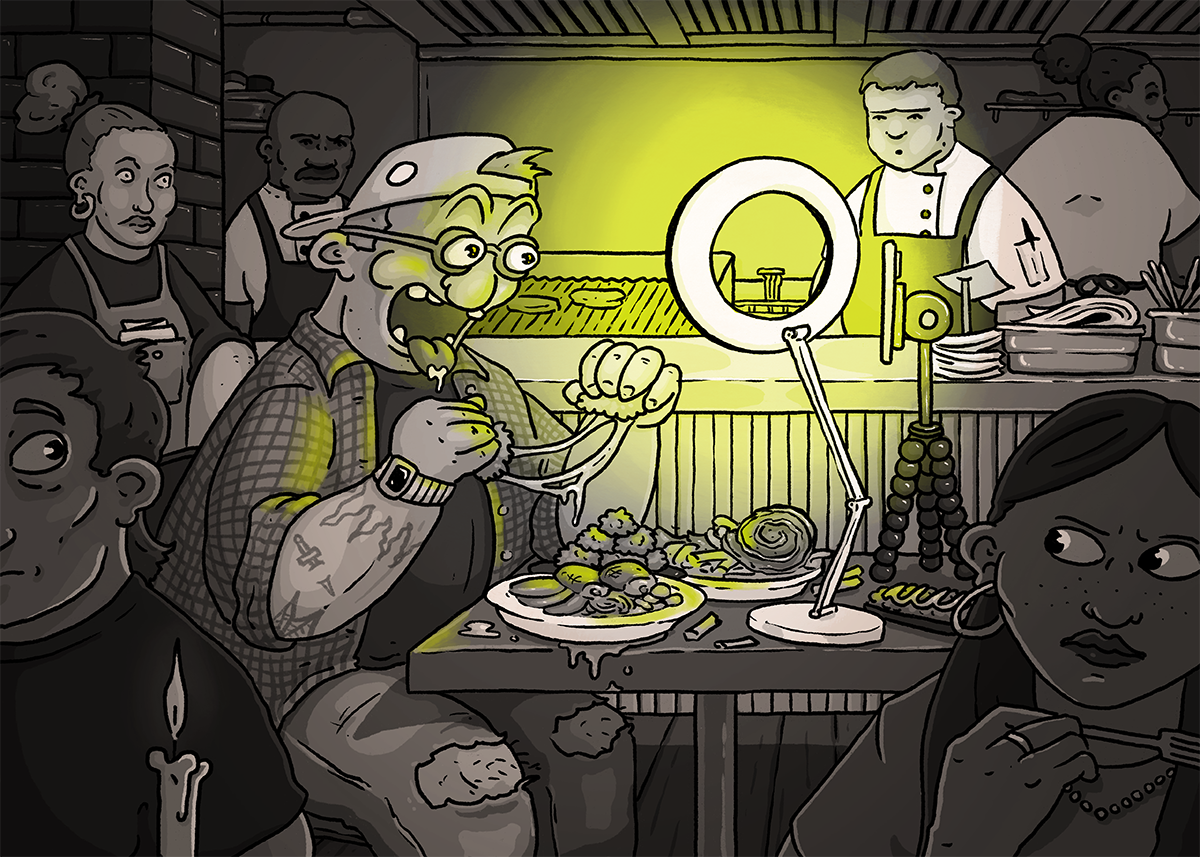
For part two of this experiment, I wanted to know whether influencers actually drive footfall to restaurants and for that, I needed places that existed.
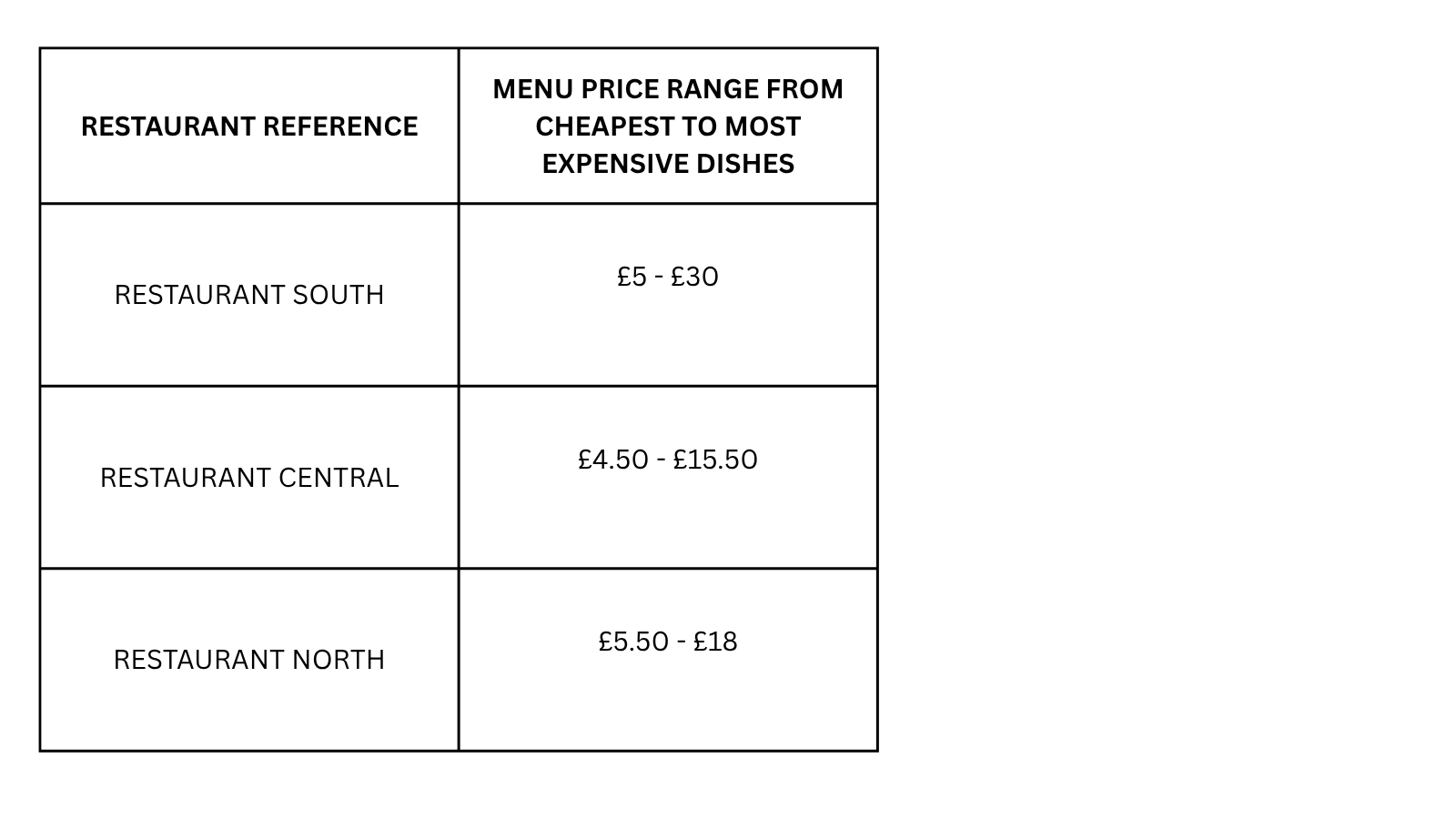
I chose three restaurants, each based in a slightly different area of Bristol, and asked them to contact the same three influencers. I have categorised the influencers and restaurants as follows, but to protect them, all the participants (willing and unwilling) in this experiment remain anonymous.
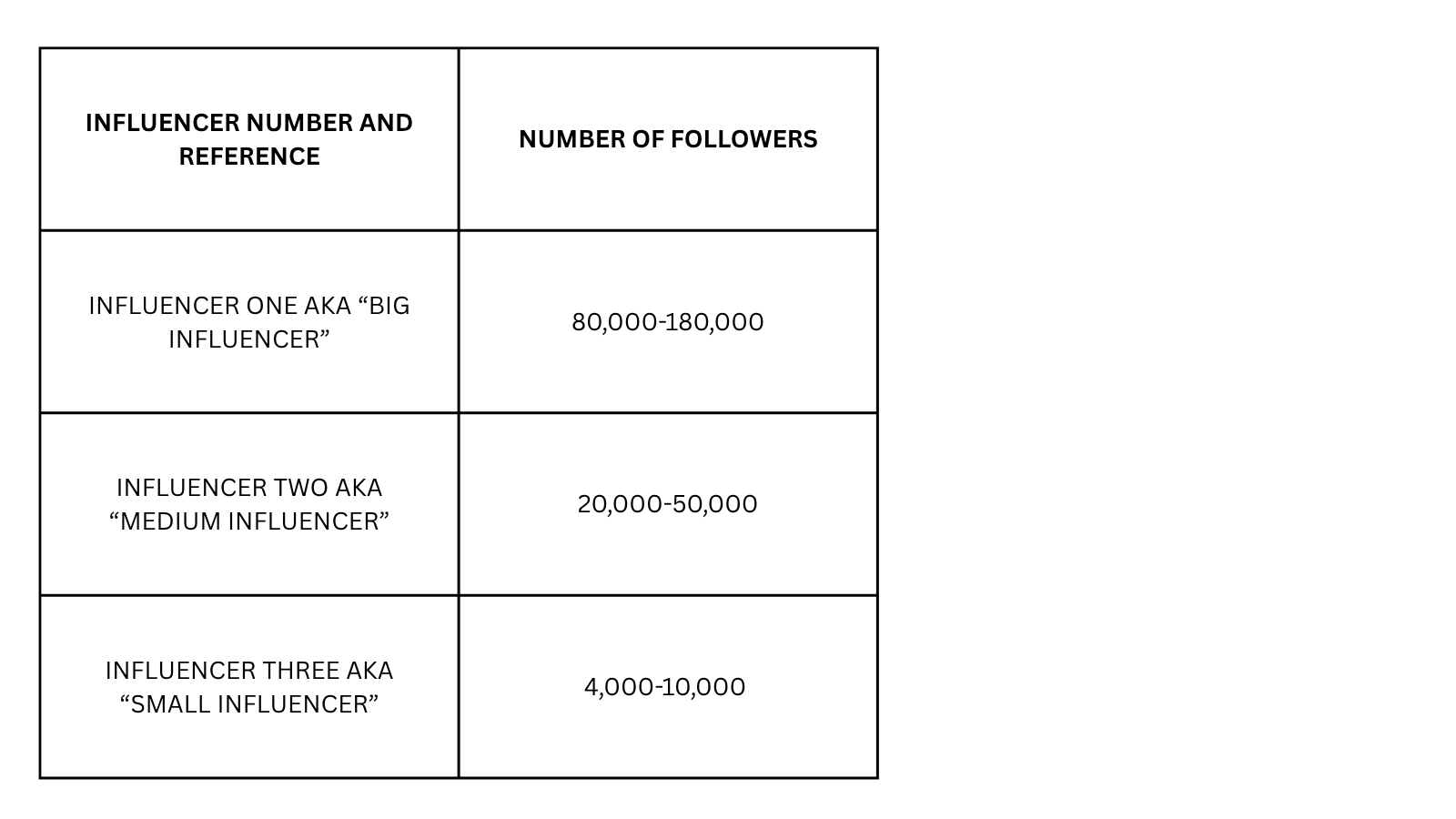
There’s a common misconception that influencers work for free, and are just ‘gifted’ food and experiences — and there is clearly a proportion that do operate like this. But many do not realise that the person who has just unearthed a new ‘hidden gem’ serving ‘the world’s best burger’ has sometimes been paid hundreds or thousands of pounds to do so. And the food and drinks are free as well, of course. For many influencers, this is very much a full time job, and often a well-paid one at that — or at least a lucrative side hustle. There’s nothing wrong with charging for your time and skills, as long as the person watching the content knows that it’s an advert.
But I did not know if these influencers were consistent in how much they charged. Had they quoted a price to Sake, my fake restaurant, because of a perceived value, or did they charge the same across the board? This is why I wanted to check the fees across three different restaurants — each serving a different cuisine, and possibly with a different perceived value.
I was relieved to see that these three influencers quoted the same across all three restaurants; they are consistent. It’s worth noting that the restaurants are all independent — some influencers charge more for chain restaurants, which seems fair.
I then worked with one of the Bristol restaurants to plan an influencer campaign, and the restaurant agreed to share the data found for use within this article. The influencers were all paid by the restaurant directly in this case as part of their campaign.
I worked with the restaurant to devise a system of measuring the impact each influencer had on bookings and spend per head. Measuring such impact is challenging but great care was taken to make the data as accurate and reliable as possible. We offered the followers of each influencer a small freebie that could be traced back to said influencer and that was redeemable over a two week period following the content being posted.
There were pros and cons to this approach. Firstly, there’s no guarantee that the people influenced would redeem said freebie, and the freebie was of relatively low monetary value, so it wouldn’t have been a deciding factor in people wanting to go to the restaurant. We needed this to be the case so that it wouldn’t skew the numbers, but it also could mean that people forgot about it or considered it unimportant and not worth redeeming.
We had each influencer post their videos with at least a two week buffer period before the next, to minimise crossover, and had the small influencer post first, then the medium, then the big.
We did not ask the influencers to mark the video as an advert, as we wanted to see what they would do naturally. The small influencer marked the video as #paidpartnership at the bottom of the caption and both the medium and the big influencer put ‘ad’ at the beginning of the caption.
So what influence do they actually have?
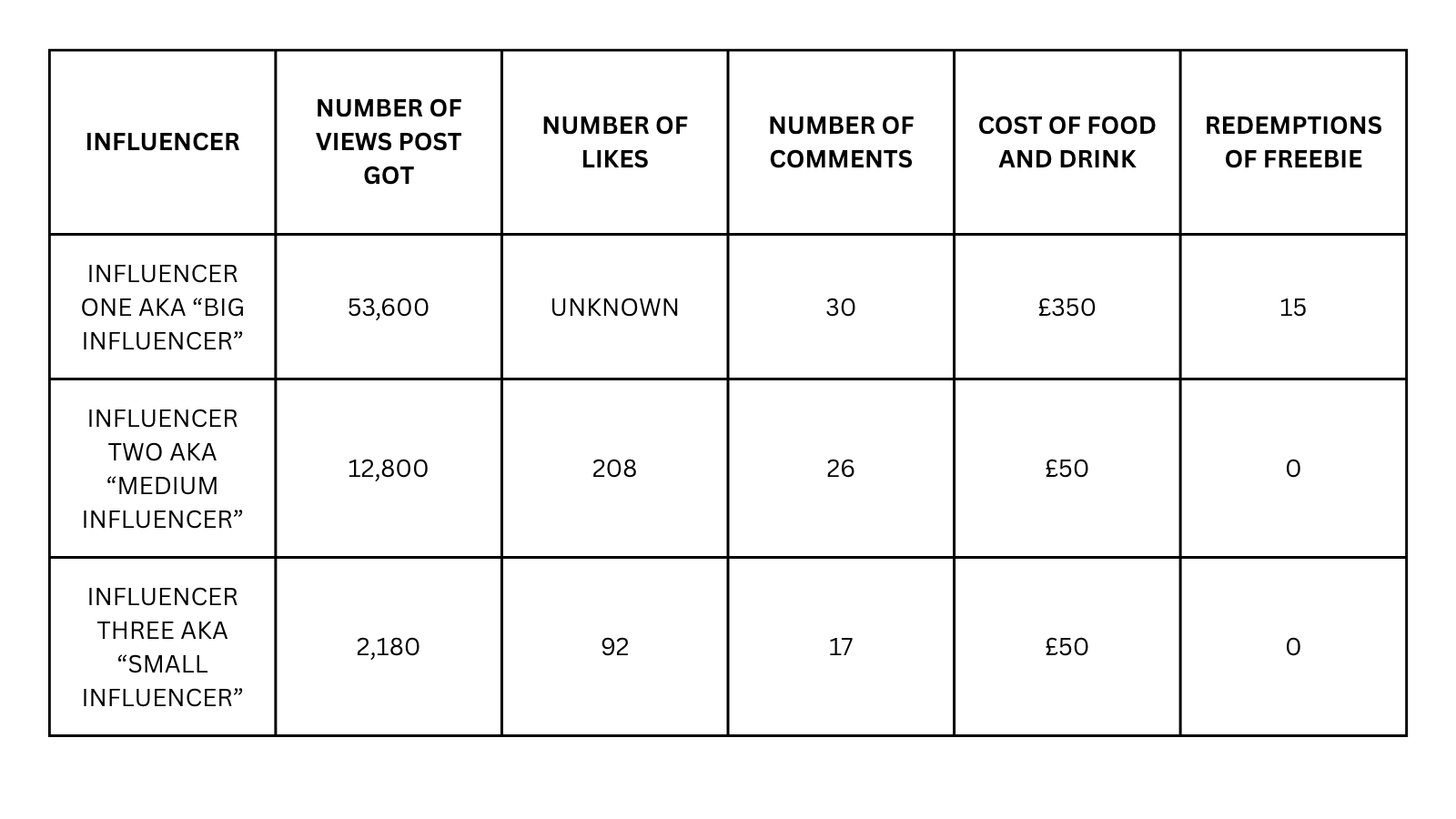
The big influencer brought nine people with them on their visit when they came to film. The restaurant had not specified how many people they could bring or how much they could spend. The staff reported that such a big group combined with the influencer wanting to film made the service more difficult logistically.
The big influencer also posted their video over a week later than they had said they would. This didn’t massively impact our plans, but it’s worth highlighting because if the restaurant had been following a specific marketing plan this could have caused a disruption.
None of the influencers tipped the staff. There was no food waste reported.
“I’ve been to places in the past where some influencers see it merely as a piss up — I’ve seen this firsthand and heard it from restaurant owners too. It’s the greed; the overconsumption and over-ordering of food they think they’re entitled to because “it’s for content.” Respect and appreciation ALWAYS needs to be shown to the back of house team, the chefs and the waiting staff for the work they do. Alongside being way more mindful with not over-consuming for the sake of a free meal. Stock and produce are expensive on top of business fees, VAT, staffing costs etc. Many restaurants are operating on extremely tiny margins, so it’s disheartening to see unnecessary greed. I also rarely see tips being left or given to the staff which is disappointing. It doesn’t matter if the event is free, the staff are still working hard to provide excellent service and the chefs are sweating harder to provide good quality food — a tip should mean even more when everything else has been covered” - Influencer
The average spend per head at this restaurant is £19.87. We cannot say for certain if the small and medium influencers actually drove traffic to the restaurant, and it is entirely possible that the tail of their influence is longer than two weeks. The big influencer did drive traffic, but on this occasion, not very much. According to our experiment, the total cost to the restaurant was around £1340 (made up of the cost of paying the influencers and the cost of the food and drink), and drove 15 redemptions of the freebie which we can reasonably assume is about the equivalent of £298.05 worth of custom. We also checked year-on-year data from the restaurant — which had not changed — and asked for staff testimonials about whether they had noticed any increase in custom, and they reported that they did not.
The owner of the restaurant said: “We’ve been running restaurants for a long time, long before content creators were the main source of food media, when newspapers and magazines had the ability to make or break your business with a review. We have always had really good relationships with the content creators in Bristol, big and small, and most have done posts or supported us for free outside of specific campaigns.
“We understand there is a lot of time that goes into creating the content and that it’s a full time job and therefore their time needs to be charged for. Unlike traditional media you don’t tend to see a specific uptick in business directly off the back of an influencer campaign but it works as part of a greater marketing eco-system, one which I believe is good value on the whole for food businesses, but certainly great value for the food scene in general. Outside of the specific impact on any one business what the rise in content creators, especially some of the bigger ones, has done for Bristol’s food scene in general in creating a landscape for businesses to enter is a huge value add and one that I hope continues to grow.”
There may be other benefits of using influencers, such as a restaurant’s uptake in following on social media from their posts. In this instance, the restaurant reported that they gained 6 followers in total from the three influencers’ content.
It’s worth noting that it’s entirely possible that if the restaurant was new, the uptake in visits would have been higher. The restaurant in question has been around a while and is probably familiar for most people in Bristol, and so might not have driven the same amount of traffic as something perceived to be new and exciting.
“There are influencers out there who do genuinely put in a lot of time, effort, love and even their own money into investing in specialised equipment. Their dedication really shows — not just by the quality of their content but by the real life positive effect they have on businesses. I have seen and experienced the effect a video from one influencer in particular can have and it is truly remarkable. To see a place go from reasonably quiet one week to literal queues out the door the next, is a massive win and does show the positive impact and actual real life influence one person can have.” - Influencer
Though the same can likely be said from any form of marketing or PR, there’s also the problem that while commissioning a big influencer may drive a short increase in traffic, it drops off leaving the restaurant back at square one. I have heard instances of restaurants recruiting extra staff to manage such events, or running out of menu items leaving long-term customers disappointed, all in the name of unsustainable and ephemeral trade.
“Do they bring more customers in? Yes and no. It’s a really hard thing to gauge. I’ve done openings in the past where we’ve invited multiple influencers and I think that helps, when there’s a lot of them because it creates noise and it hits lots of different markets. The odd influencer here and there, no — I don’t think it makes a massive difference. If they create really great content that they share with you as well, that you’re happy to share on your Instagram, then that’s a bit different. That does, I suppose, translate into bookings. But in my experience I don’t see a massive difference when we’ve had anybody in.” - Manager of a Michelin-Guide restaurant
There’s also the disruption to other customers to consider — particularly if the influencer brings a film crew or ring lights (the lights used to better illuminate food and faces in the absence of good lighting), it can be disturbing to fellow diners. This also could be illegal, as restaurants are private property and therefore technically permission is required for filming. Likely if the influencer has entered into a contract with the restaurant this will already be covered, but it’s worth noting that the restaurant is required under the UK’s data protection laws (GDPR) to warn customers that filming is taking place with signs around the restaurant. As a frequent restaurant-goer, I have been filmed in restaurants many times without my permission. If I was to find such content online, I’d have the ‘right to erasure’ which would mean the influencer would have to remove the clip that contained me in it. According to this article by SRipLaw, influencer activity falls under commercial filming, which means that they have a responsibility to get permission, including possibly release forms, from anyone who may appear in their content. I wonder how many of them have considered this.
“As for the experience for other diners, it varies. I’ve had influencers who want to change tables four times, they want to take pictures in various locations, they didn’t eat any of the food or they let all the food go cold. I’ve had staff that are so obsessed with serving the influencers that they don’t give the other guests the right amount of attention which is not good for other diners. I know there’s also been a bit of noise about ring lights in restaurants and I don’t think that’s that big a deal as long as they’re not shining on other peoples’ tables or in peoples’ eyes. It’s just about not being a dick. There’s plenty of pricks that come into the restaurant that aren’t influencers.” - Manager of a Michelin-Guide restaurant
To help understand the results of my multi-part experiment, I needed to get to grips with the laws that govern this world. I was fortunate enough to be put in touch with a regulatory solicitor for food and retail who was able to shed some light on areas that my research couldn’t.
Advertising in the UK is regulated by the Advertising Standards Authority (ASA), the Competition and Markets Authority (CMA) and Trading Standards. The ASA has clear and comprehensive guidelines on influencer marketing. The ASA’s guide states: If an influencer receives payment or any other incentive (requested or unsolicited) from a brand, or they are otherwise personally or commercially connected to the brand (e.g., owner, employee, shareholder, director or have any other commercial or personal interest), any content featuring or referring to the brand will need to be obviously identifiable as advertising. This is a requirement under consumer protection law, enforced by the Competition and Markets Authority (CMA) and Trading Standards Services.
The data in part one suggests most influencers I spoke to are aware of this requirement — though perhaps not in great detail. In all other industries, it is the responsibility of the business or individual to know what the law is regarding their work, and influencing should be no different. According to our lawyer, it’s expensive to prosecute which is why it rarely happens in the case of individuals. Trading Standards would be the ones actually prosecuting, but they have limited time and tend to prioritise things that are dangerous rather than things that are misleading.
The lawyer said: “the ASA can’t fine people themselves, but they can warn people, make them take down the content, and repeat offenders get put on a ‘naughty list’. If someone repeatedly offends, Trading Standards would enforce it. We’d be looking at sanctions such as warning letters, enforcement notices, up to prosecuting and getting fined in court. There has to be public interest in taking them to court. That’s why they don’t usually pursue one post that’s misleading.
“The CMA has additional powers. They can fine up to 10% of turnover without going to court. But this is unlikely. What they can also do is make them sign an undertaking, which is a legal document they sign saying ‘I will not do XYZ’, and then if they breach that the consequences are more severe.
“The ASA have AI mechanisms to search for key terms to find adverts that are misleading.
“We have seen the ASA pick on burying the ad notice in the hashtags and in the read more section, that’s in breach of the guidance. The guidance is what the regulators use to decide what’s misleading.”
Interestingly, the ASA goes on to confirm that the restaurants or brands the influencer is working with also have a responsibility to make sure the content is clearly marked: ‘When a particular ‘advertorial’ is found to breach the Code, both the publisher (i.e., the influencer) and the brand will be named in the ASA ruling.’
But what does obviously identifiable as advertising actually mean? Many influencers bury the word ‘ad’ in the hashtags, knowing that not many people will click to see the extended caption of their post, let alone read each of the hashtags.
I’m afraid that #guest, #invited, #PR, #gifted and other similarly ambiguous additions don’t cut it either — unless it says ad or advert at the start of the content and on each photo if on stories, it is breaking the law. None of the other words mean anything legally. It’s my opinion that social media platforms such as Instagram and TikTok are not doing enough to make the labelling of ads clear. It is likely both the restaurants and the influencers who are hesitant to be overt with their labelling; restaurants might want the content to look like an organic recommendation and influencers don’t want to look like straight up advertisers.
Upon further research, I discovered that the CMA published ‘fake reviews guidance’ in July of 2025, which the detail-oriented among you can read here. This guidance provided further answers I was looking for.
The guidance makes clear that it is against the law to post an advert that has been ‘incentivised’ without declaring it is an advert. The guidance clearly indicates that incentivising includes being given freebies and is not limited to monetary payment. It also states that any label placed below the ‘read more’ section in a caption or in the hashtags is against the law.
Thus it is both the responsibility of the influencer and the restaurant to make sure that the content is very clearly marked as an ‘advert’ right at the beginning of the caption and/or image/video. It also means that incentivised Google reviews from influencers, which are now often being included as part of content packages as we saw in part one, are also against the law.
Perhaps one of the most important takeaways from this guidance is that the responsibility lies just as much with the restaurant owner or ‘trader’ in the CMA documents as it does with the influencer, and it is them that would also be liable for fines if these laws are broken.
The lawyer added: “in short, under the DMCC act, there’s a general catch-all rule that if it’s likely to cause the average consumer to take a transactional decision that the consumer would not have taken otherwise — so basically it’s if anything you do would change a consumer’s purchasing decision that is potentially an unfair practice which is unlawful. There’s a lot of practices that are always banned, such as not declaring an ad.”
When I ran the experiment in part one, with the fake restaurant Sake, I discovered that many influencers are artificially inflating their engagement and leaving comments on other influencer’s posts in a mutual agreement to fool the algorithm.
According to our lawyer, this is more of a contractual issue: “the restaurant in question would have to take the influencer to court over the contractual arrangement. It would be fraudulent misrepresentation, which gets them damages/right to end the contract. It’s contractual sanctions as opposed to criminal, and it’s a clear contractual issue if the people ‘engaging’ are not local. But it could also tip into misleading consumers, which may itself fall under the fake reviews guidance of the DMCC Act.”
The lawyer also confirmed that if an influencer guarantees positive coverage before having an experience, that would fall under the DMCC’s guidance on fake reviews and could be punishable in a criminal court.
The ASA publishes recent rulings every Wednesday on their website. Some recent judgements include a TikToker being ruled against for saying a meal kit was made by Michelin-starred chefs in fact it wasn’t, another for swearing in an ad which is against the CAP code and one for promoting Lidl bakery items on Instagram which are unhealthy: “The CAP code required that persons must not pay for ads for an identifiable less healthy food or drink product to be placed on the internet”.
New legislation, which came into effect earlier this year, restricts advertising of certain foods, including burgers, pizzas, ice cream, pastries and cakes. Organic content is allowed, but anything paid-for — which includes ‘gifted’ meals — is covered, meaning in some cases it is now illegal for influencers to promote unhealthy food. The exemptions to this include small-medium enterprises with under 250 employees. This means that small independent businesses do not need to adhere to these rules, but any larger businesses do. Thus, an influencer promoting a burger from Danny’s Burgers is allowed, an influencer promoting a burger from Five Guys, which is a chain, is not.
Many of the ASA’s rulings are against celebrities including Kerry Katona and Arabella Chi. The increasingly blurred line between being a celebrity and an influencer is one to pay close attention to, and the ASA is likely more concerned about this because of the higher numbers of followers that celebrities tend to have.
So what have I learnt from all this research? The lack of transparency with which the influencer world operates is troubling. Influencers are a significant part of many industries now, not just restaurants, and what I have established is at play in Bristol will be very similar across the country, and indeed in other parts of the world. Some influencers clearly operate in a way that is transparent and meaningful, but others are knowingly or unknowingly breaking multiple laws, misleading consumers and exploiting businesses in an industry that is already on its knees.
“When it comes to the type of content being created, I would say there’s a handful of creators that have honed their craft and built a strong, reliable voice in the city. I respect those as I know the pure graft that goes into achieving that and the hours, if not days, that is put into one video. However there is A LOT of lazy content out there too. A lot of repetition. A lot of hype for hype’s sake. You get out what you put in really. The content will speak for itself” - Influencer
“For some people they are good, there’s a reason they exist. You can’t ignore them. But I don’t think in this climate of the restaurant industry – I feel like we’re almost better off putting an ad in the paper. With this saturation on Instagram and TikTok, how many people actually stop and watch them? Is there not better ways for us all to be spending our money than giving free food to these kinds of people?” - Manager of a Michelin-Guide restaurant
It may not seem like a big deal if you go and get a burger that’s not very good because some bloke on Instagram told you to, but I think on the whole this speaks to a bigger concern — it is getting harder and harder to discern what is ‘real’ and what is not on the internet, and that’s only likely to get worse.
Behind everything you see online there are forces at play — algorithms, big businesses, political allegiances, investments and undisclosed money. The practices I have outlined in this piece are true across all industries; not just hospitality. Beauty and misleading supplement advice are already more strictly regulated by the ASA, the CMA and Trading Standards, as they are more likely to be dangerous.
So what can you do if you want to limit the impact that this content has on your life? Aside from deleting social media entirely, there are steps you can take to protect yourself somewhat. Unfollow people who might be giving you ‘recommendations’ without being transparent. Question why someone is telling you to eat somewhere or buy something. Ask people whose content you enjoy to be clearer about where they have received freebies or a payment. And, if worst comes to worst, you can report people you believe to be flouting the rules to the ASA here.
To any influencers reading this — whether you consider yourself an influencer, a content creator, or just someone that is occasionally ‘gifted’ things such as free stays, free food or products — please remember that you have a serious responsibility to not mislead the people who have placed their trust in you by following you. Lead by example.
As mentioned in the introduction, part three will give some of the influencers addressed in this investigation the right to reply, along with further thoughts from restaurateurs. That will be coming this Thursday, 21 May. Subscribe now to be the first to read it.
References and further reading:
https://policyreview.info/articles/analysis/undisclosed-brand-partnerships-platform-policies
https://www.asa.org.uk/codes-and-rulings/non-compliant-social-media-influencers.html
https://www.gov.uk/government/publications/fake-reviews-cma208
https://www.asa.org.uk/resource/less-healthy-food-and-drink-advertising-guidance.html
https://britishfilmcommission.org.uk/guidance/regulations/
Extracts from the DMCC Guidance:
1.1 There is a new banned practice relating to reviews in the Digital Markets, Competition and Consumers Act 2024 (DMCC Act). It sets out behaviour that is automatically unfair and illegal. It covers fake reviews, concealed incentivised reviews and requires traders not to publish consumer reviews (and information derived from them) in a misleading way. Traders publishing reviews must also take steps to prevent the publication of fake reviews and reviews where incentives are hidden, as well as information derived from reviews which is false or misleading.
2.9 A review conceals the fact it has been incentivised if:
(a) a person has been commissioned to provide the review, and
(b) that fact is not made apparent (whether through the contents of the review or otherwise).
This would include missing, obscure or hidden disclosure of the fact that the review has been incentivised.
2.10 Commissioning can take many forms and is not limited to making monetary payments.
Examples of commissioning include, but are not limited to, being asked to write a review in exchange for:
(a) money,
(b) commissions,
(c) discounts or vouchers,
(d) leases or loans free of charge or on more favourable terms than those offered to the general public,
(e) products given free of charge (‘freebies’),
(f) free stays,
(g) invitations to events etc.
3.3 Anyone who engages in the commercial practice of either submitting or commissioning banned reviews will be in breach of the banned practice. This includes professional reviewers, journalists, content creators (such as bloggers, influencers, online streamers, celebrities, social media personalities)
3.5 Where it is permissible to post a review that has been incentivised on a platform, the review must be clearly identifiable as incentivised. This must be made clear to anyone engaging with the review, so that it is apparent that they are viewing incentivised content. Usually, it will be necessary for the reviewer at least to label the review prominently as incentivised, namely, as an advert. The label should not have an ambiguous meaning or be placed where it might not be seen.
This is the best series I’ve come across talking about influencers in food. Can’t wait for part 3!
Bravo Meg. Fascinating, informative reading. What a tangled web we weave……