


IIt’s rare to go to a spot so new and for it to be bang on from the get-go. I suppose Red Tiger had their St Nick’s stall, and they’d run pop-ups, but this is a particularly strong start regardless. Such is my confidence in it that I’ll be adding it straight to the Sauce map — which you paying Saucers can access and download here. Upgrade your subscription now to support our journalism and find Bristol’s best restaurants on the go.
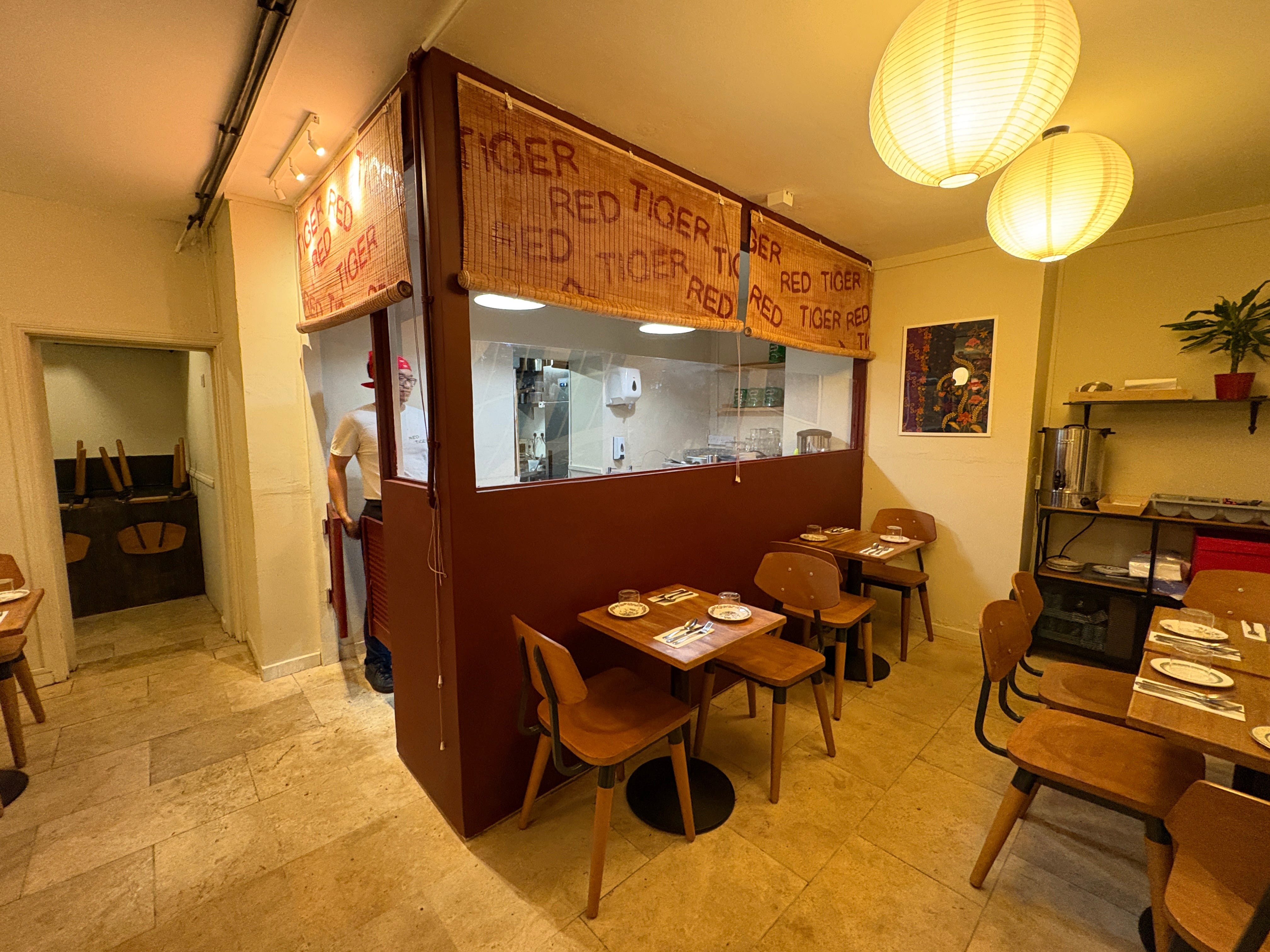
For a year at University, I lived with, and played football with, a chap from Kuala Lumpur called Adlan. I was the better footballer, he the better cook. A situational comedy scenario waiting to happen, especially when his leftover char kway teow started going mysteriously missing from the fridge. Luckily there were three or four of us with access, so the finger couldn’t be pointed with any degree of certainty. At least not until the others, unbeknown to me, decided to go away at the same time, which resulted in a rather passive aggressive (albeit justified) post-it-note stuck to the fridge bearing an accusation that was hard to refute.
That initial experience of Malaysian cuisine lit a spark during a formative period of my life. So when Red Tiger, a spot offering ‘Malaysian hawker classics’ opened up on Saint George’s road, I made an immediate beeline.
Roti canai (£11) is so important to the Malaysian community that it was added to the UNESCO Intangible Cultural Heritage List of food and drinks in 2024. South Korean kimchi and Peruvian ceviche are also included, alongside ‘Artisanal Know-How and Culture of Baguette Bread’ from France and then ‘The Gastronomic Meal of the French’. Currently nothing from the UK is considered worthy. Surely fish and chips deserves a spot? Or Bravas’ fried aubergine with molasses? Too Spanish? Tell that to the Malaysians, who nicked roti canai from South India.
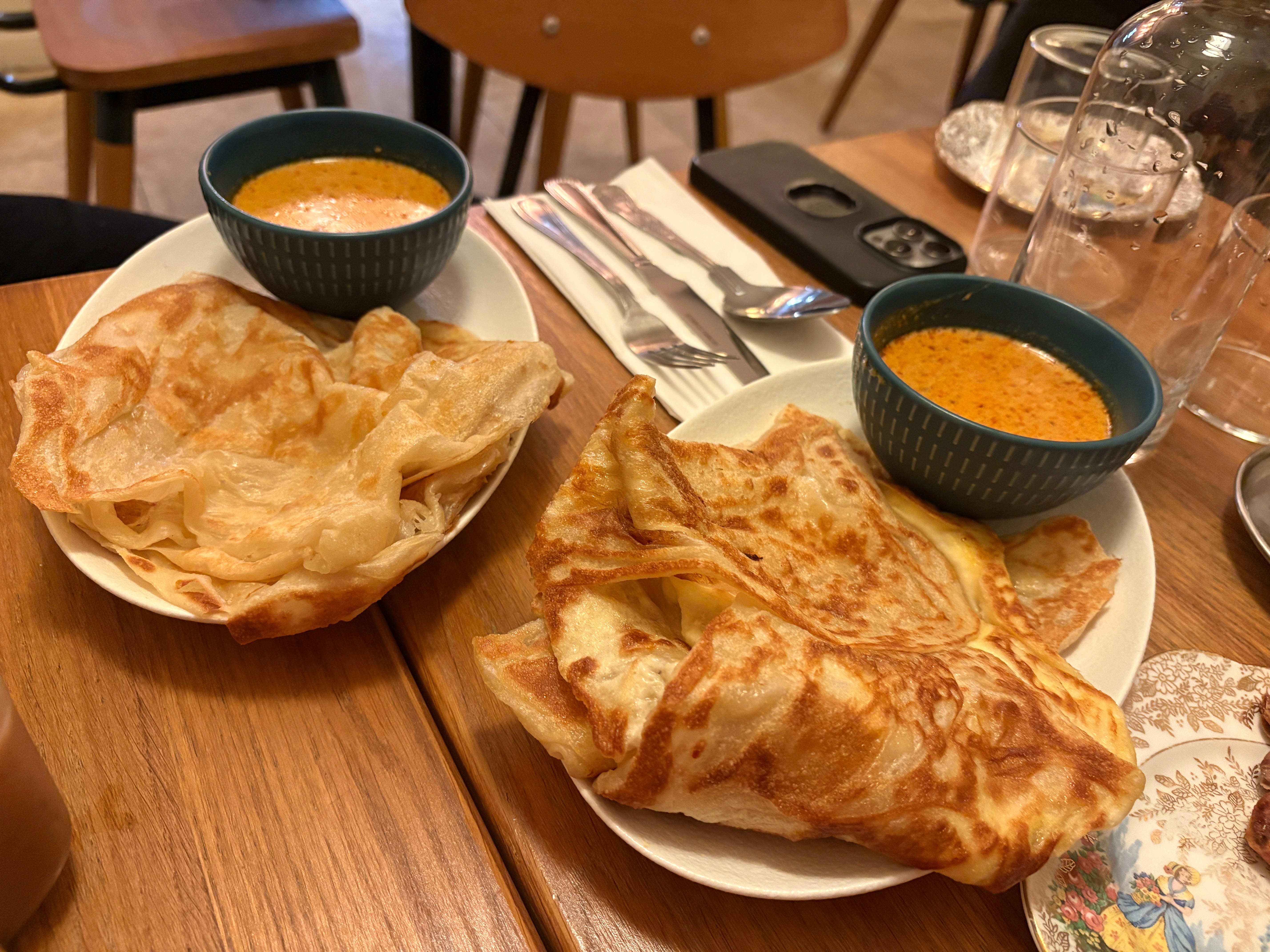
These days paratha-descendent roti canai is incontrovertibly Malaysian, where it is typically a breakfast dish and served warm with dahl. A triumph of migration and integration and the pure, unadulterated joy of softly flaking, eumorphus folds of dough, coiling around each other into a gloriously greasy whole. The pair we ordered (£11) sat there glistening in front of us, primed for staining with blobs of curry or simply shovelling indecorously into one’s mouth while still warm and pliable.
Roti telur (£12) — the same flatbread folded around a curd-like eggy filling — was only marginally less compelling than the OG, seeming to lose just a little of its flakiness in the process yet still miraculously crispy and soft in all the right places.
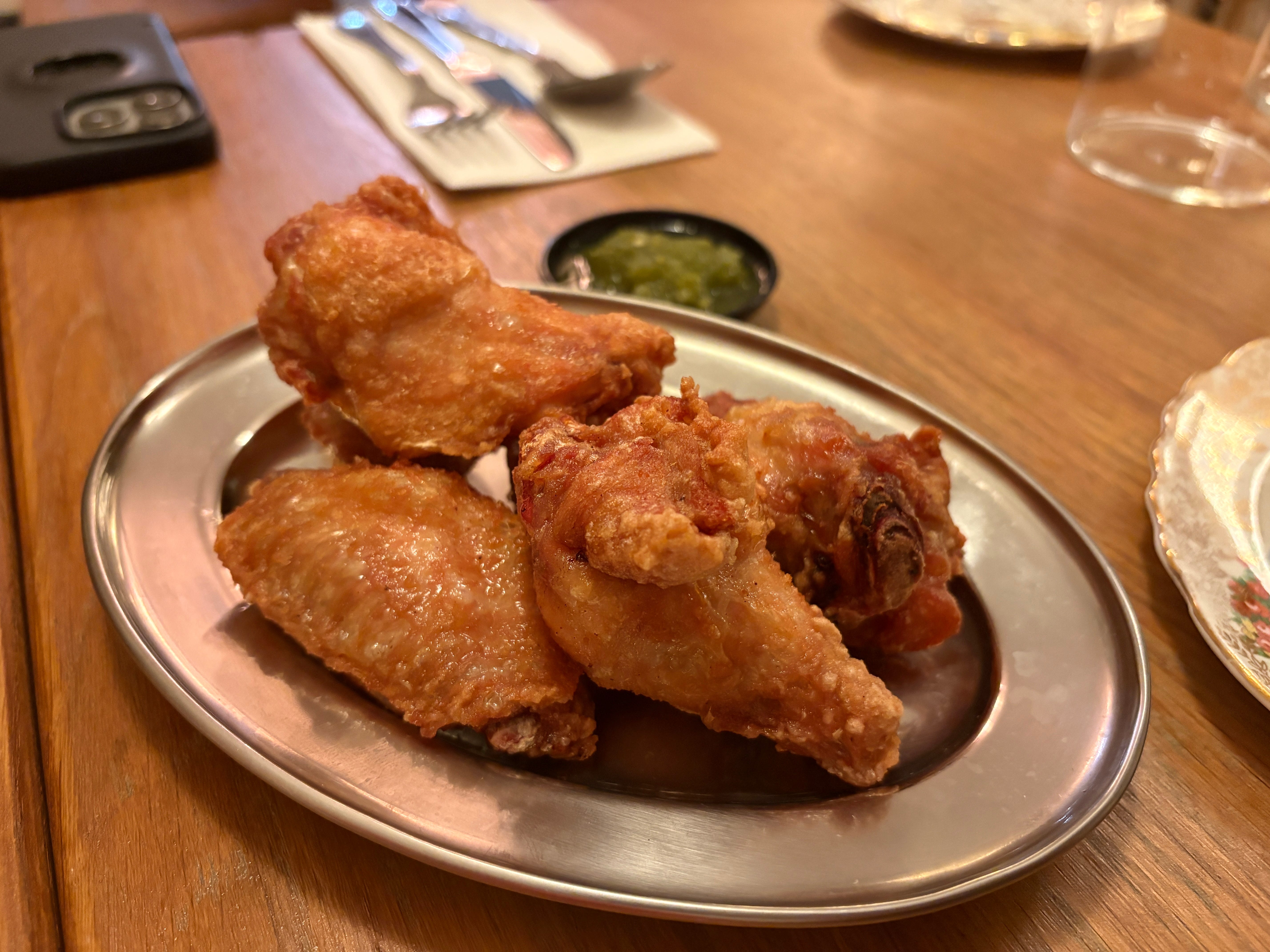
Belacan wings (£9) put the chicken-frying ability of many specialists to shame. Juicy dark meat protected by a deep-fried coating with the scaly rough scrunch of the sloughed skin from a Komodo dragon. Which, of course, is a good thing. Particularly when the mellow funk imparted by the fermented shrimp paste was enlivened by a quick dip in the sweetly pokey, fresh green chilli sauce.
There was an air of cheery chaos to the spot, which might be reflective of the venue’s street food origins, though sadly their stand in St Nick’s Market closed only a week or so after our visit. The semi-ordered hubbub meant this first wave of dishes had taken some time to materialise. Indeed, for a while it appeared as if there was just one guy running around doing all of the greeting, cooking, cleaning, serving, chatting, explaining and waiting. We were soon corrected that there were, in fact, two chefs hidden out of sight. Those chefs were performing minor miracles in the kitchen, and our, and indeed everyone’s, server was warm, charming, talkative and insightful.

The next flurry of dishes arrived soon after the first. Salted egg prawn (£14) featured, as you may even have been able to deduce without my interjection, prawns — six plump kings on this occasion — in a sauce made from salted egg yolks. On the menu it was billed as ‘creamy and umami’. I’d posit ‘custardy’. Now, if I offered you prawns in custard, you’d be well within your rights to run screaming to the closest McDonald’s. And, to be fair, if I had cooked them, that might be for the best. But that doesn’t mean you should ignore Red Tiger’s prawns. Yes, there was a definite sweetness to the dish, a riot of scarlet and pink and gold, but the velvet sauce coated the bouncy sea-dwellers generously and there was enough savoury depth and jolts of zippy red chilli to steer decisively away from pudding territory.
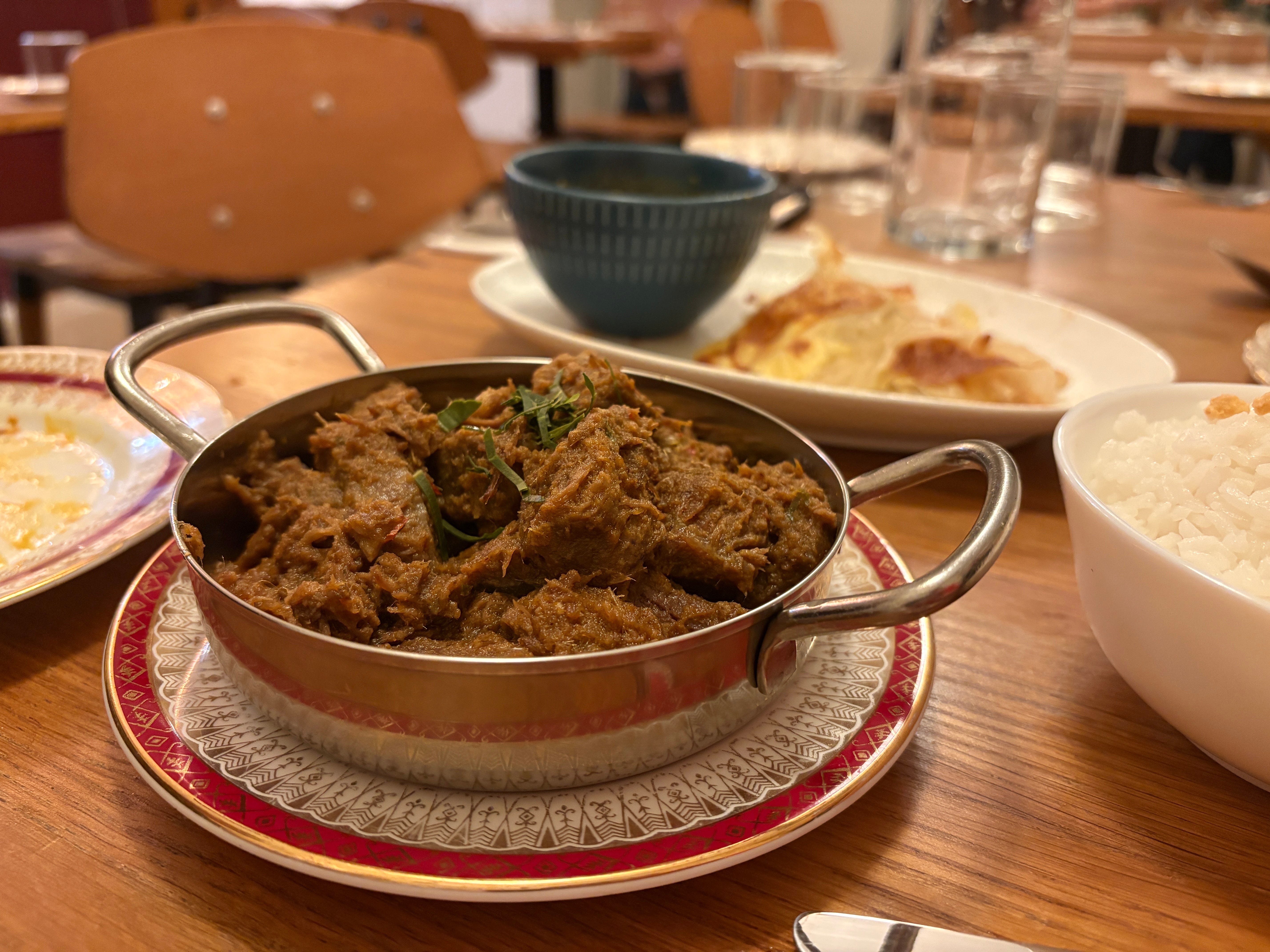
Beef rendang (£15), a personal favourite, was its classic coconutty self, even if the stringy hunks of meat in the thick gravy were veering towards dryness, and lacking a fragrant lift.
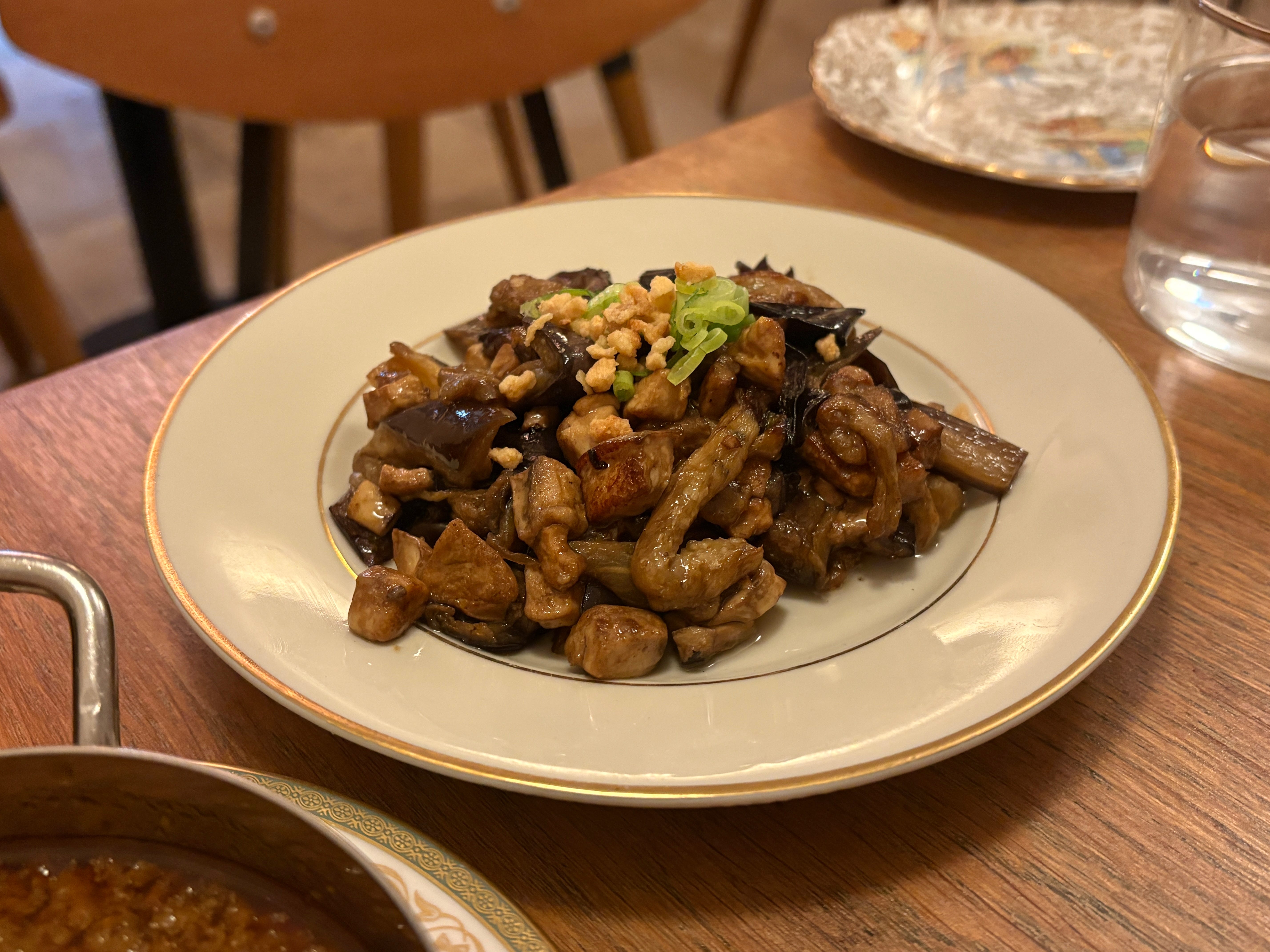
Surprisingly more popular round the table was the ‘saucy tofu aubergine’ (£8) — three words to make any vegan’s ears prick up. Those two squidgy, absorbent ingredients manifested their overlapping qualities in different ways; the aubergine slippery and oily, a hint of squeak to the slivers like it identified as a vegetal halloumi and the tofu softer and more spongy. It almost felt like the cubes of beancurd were aping minced meat in a reverse mapo tofu effect, although this saucy affair was far sweeter than the famously tongue-nettling Sichuan dish.
I don’t know who Pati is but if my current engagement doesn’t work out, I’d appreciate it if they could hit me up, or at least surrender their keema (£15) stocks. The keema I am used to — a warming, bubbly curry of minced lamb from the Indian subcontinent — comes bobbing with the shock of bright green peas. Pati wanted no such distraction, the only allowance towards your five-a-day thirty-a-week fruity arithmetics being a small tangle of pickled onions. If London’s Quality Chop House migrated to south east Asia, this is how their famed mince on toast, a British classic, might end up after assimilation. Oily in the way that makes you lick your fingers for the spiced lamb fat inevitably basting them. Cushion-soft, milky rolls, split in half and toasted in butter, just to be on the safe side, confirmed the top-tier bread game.
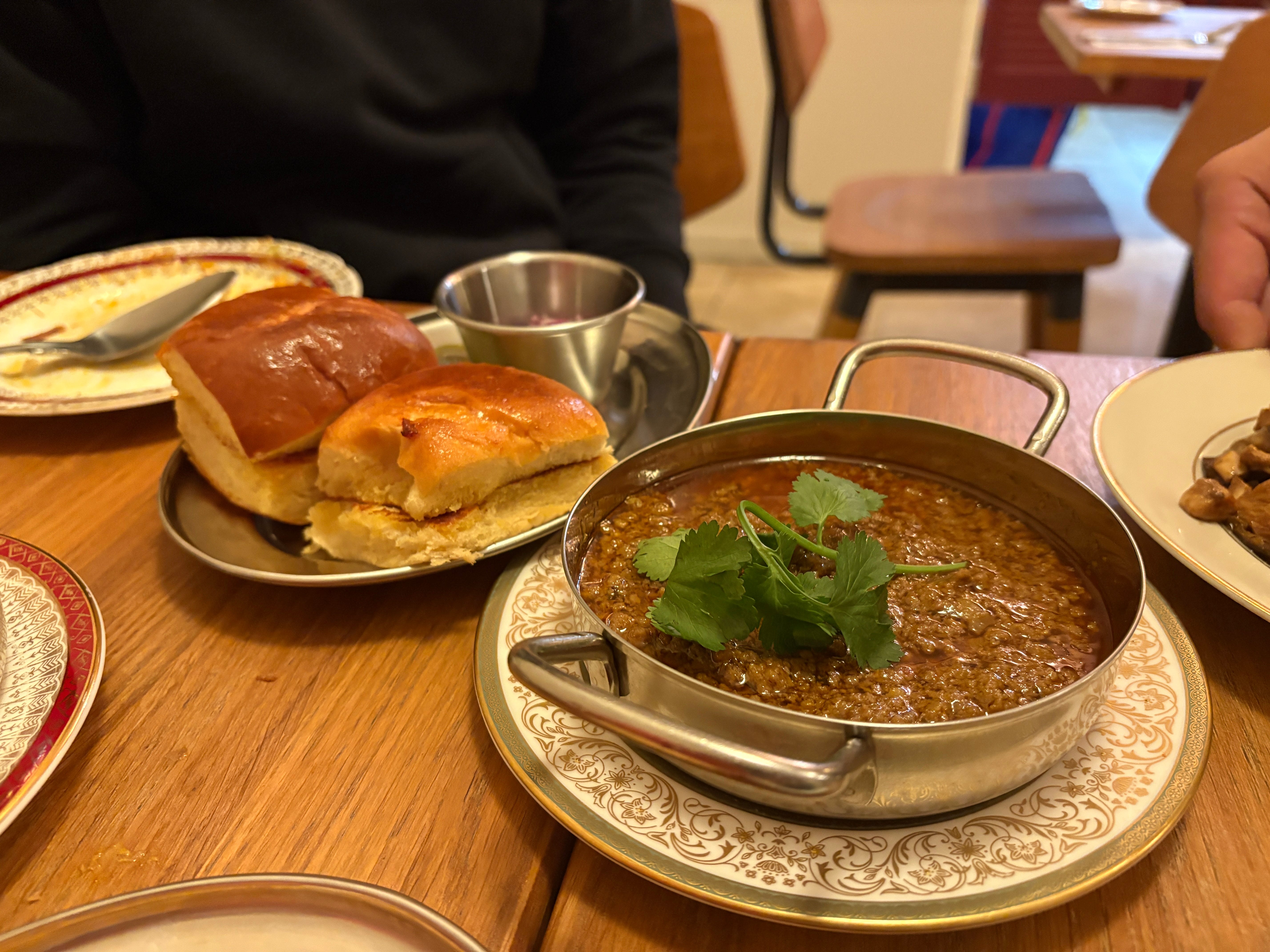
A pea-less keema seems to be a common phenomenon in Malaysia so, like a beanless chilli con carne, can be considered contextually authentic if somewhat controversial. Tell that to the vegans who say they’ll eat anything without a pulse.
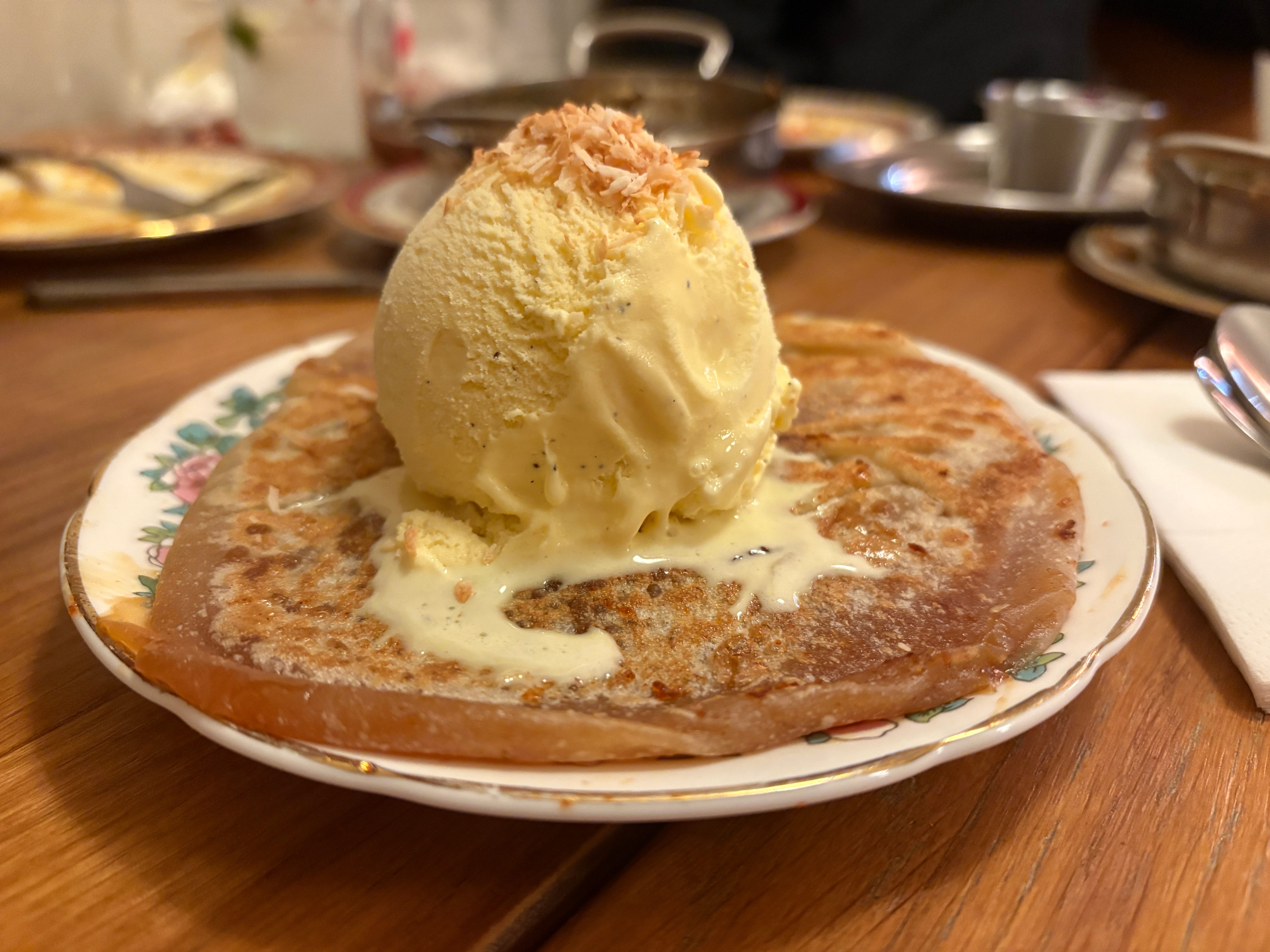
Two roti and several medium-plates down, we were undaunted by the prospect of another of Red Tiger’s flaky wonders. This one near enough filled the plate, and you could tell it was a dessert because the plate had a border of pink roses. The flowers, not the chocolates. Savoury dishes were clearly deemed too serious for such frivolity. And roti kaya was certainly a frivolous offering (£6). Filled with a coconut and egg jam the texture of caramel, dolloped with vanilla ice cream and bedazzled with more coconut, albeit the divisive desicated stuff. We attacked it with the entirely unnecessary urgency of famished schoolkids after an afternoon rolling down Brandon Hill. The ice cream seemed more for contrast and lubrication than any overt flavour, and I’d have taken more of the toffeeish filling, but I’d still endorse it to finish your meal — not least because it is the only option for dessert.
Flogging me three pancakes over the course of one meal is like selling Coles to a mid-noughties Mourinho, but a meal bookended with roti can rarely be considered a failure. As we waited for our eminently reasonable bill, conversation turned, somewhat inevitably given the name of the restaurant, to the tragic death of the visitor to Yorkshire Wildlife Park who jumped into the tiger enclosure. It was discussed around the world. Even Donald Trump, with his typically self-aggrandising masturbatory tact, posted an AI slop video of him wrestling with the big cat on ‘Truth’ Social. There were demands from some corners of the Internet for the murdering orange creature to be put to death, but these calls have been rejected. Another impeachment is probably the best we can hope for. While we wait, I suggest consoling yourself with a roti or three.
All words by PXandTarts, photos by Meg Houghton-Gilmour
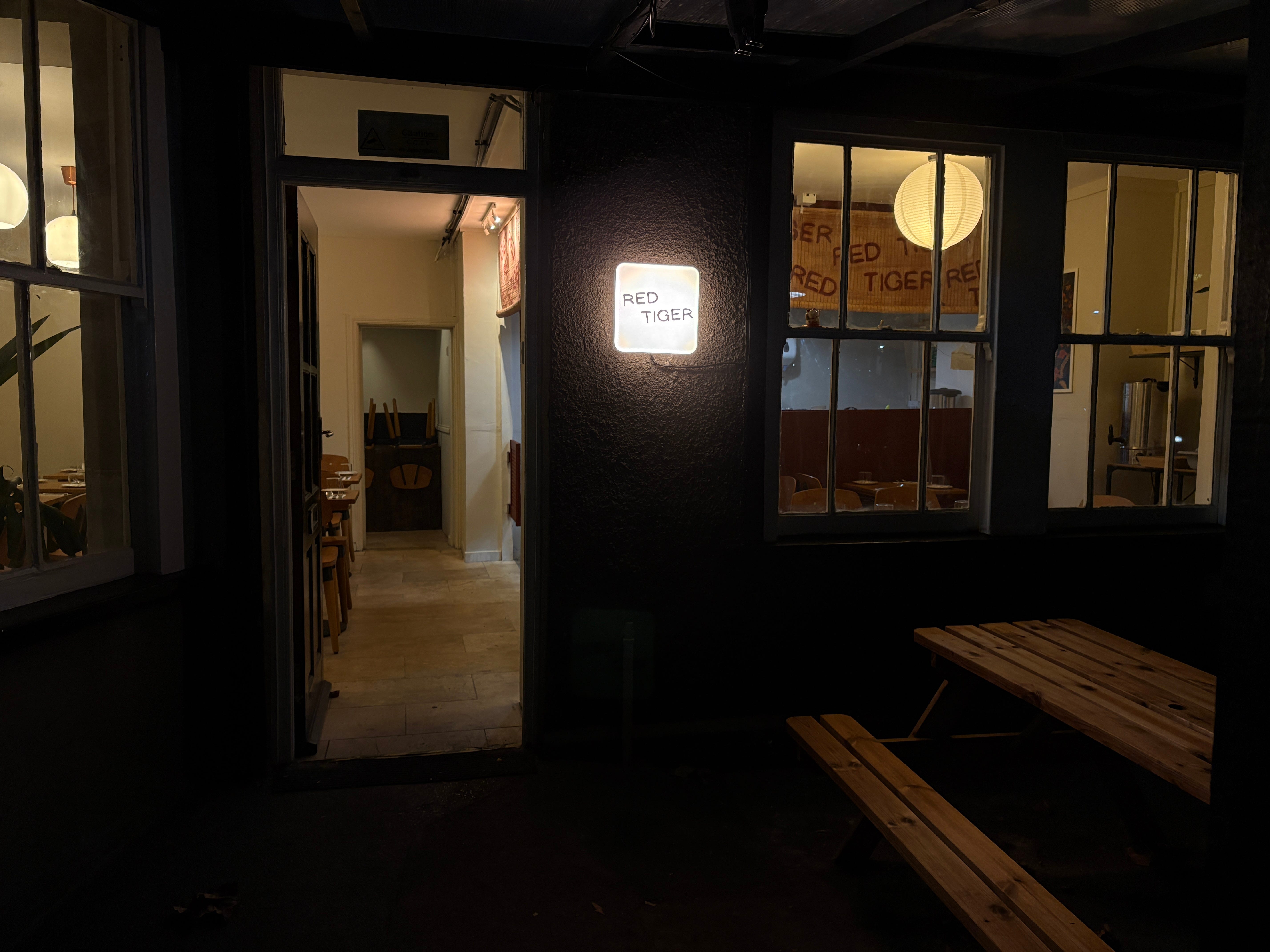
Red Tiger, 15 St George's Road, BS1 5UU
The Bristol Sauce is an AI free publication — all our work is written and edited by humans.
Find Bristol’s best restaurants on the go with The Bristol Sauce app — available exclusively to paying Saucers.

Great article. I enjoyed this one for sure, especially as I have long been a fan of what Hari and team have been doing at Red Tiger. I am mixed race (Malaysian dad, British mum) so to see Malaysian food get a shout out genuinely makes me smile, especially when it's good.
One minor point though...
Saying roti canai was nicked from south india...? Perhaps deliberately tongue in cheek or contentious (don't get started on the origins of rendang) but that’s a real misunderstanding of Malaysian culinary history. Roti canai was created in Malaysia by Indian Muslim immigrants (Mamak community) who adapted South Indian parotta/paratha techniques to suit local tastes and ingredients. The stretching and flipping created a much lighter, airier bread than its Indian predecessor. It’s an authentic product of the Indian immigrant population in Malaysia and an absolute cornerstone of our cultural heritage.
Anyway. Malaysia boleh!