


I’ve said it before and I’ll say it again. If a restaurant is within an hour’s drive from the centre of Bristol, I consider it fair game. I don’t often find myself in Cardiff, but when I do, Jonathan Swain is the man I turn to. His knowledge of the Cardiff restaurant scene is unmatched, and his palate is one I trust. Jon’s been singing the praises of Lahore Kebabish for a while now, and we thought it only fair that we let the Bristol crowd in on it. Support our work to seek out and platform overlooked spots by becoming a paying Saucer.
To understand Grangetown, it helps to know something of Cardiff’s growth as a port city. In the 19th century, the city attracted successive waves of immigrant workers, who established some of Britain’s longest-standing multicultural communities. The Tiger Bay docklands (now Butetown) — and later, neighbouring Grangetown and Riverside — became home to seafarers from over fifty nations, Somali, Yemeni and Caribbean lascars prominent among them.
They stayed. They put down roots. They built communities. Successive decades have seen new influxes, from India and Eastern Europe. The largest primary school in the area, where three-quarters of the pupils count English as their second or third language, lists fifty languages represented. The percentage of pupils eligible for free school meals is almost double the national average. In 2025, the Welsh Government’s Index of Multiple Deprivation noted that little has changed since its report six years earlier: that streets you can see from today’s restaurant still form one of the most housing-deprived areas in the country.
So no, Grangetown isn’t some chic suburb. You aren’t going to see it starring in some glossy Sunday supplement. It isn’t in imminent danger of making it into your favourite content creator’s glossy ‘Date Night Inspo’ reel.
Their loss. I worked in Grangetown for fifteen years. You want to see an area’s issues up close? Teach there. I met people with few resources who showed me extraordinary generosity. Usually, through the (very welcome) medium of food: carrier bags crammed with foil-wrapped chapatis, tubs of samosas and kofte, pots of dal, fragrant biryanis knotted with chicken or mutton.
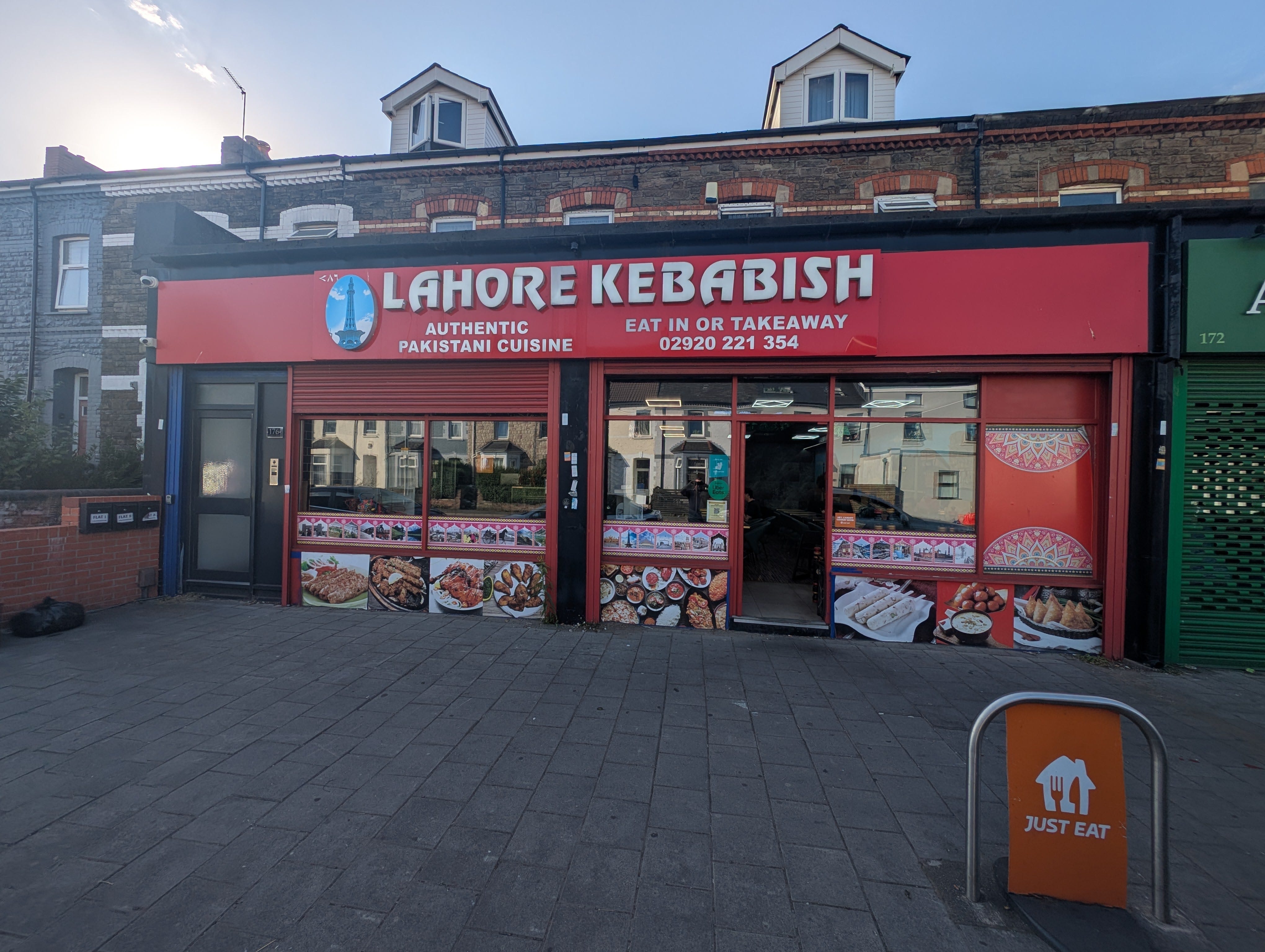
It’s here, on busy Penarth Road, that you’ll find Lahore Kebabish. The restaurant’s growth since 2022 has been impressive: few businesses could hope to generate the sort of post-COVID momentum which leads from three tables to a fifty-seater. The extra space comes in handy: this bright red ‘hidden gem’ on a busy main road has standing room only at Iftar buffets.
They have done it the hard way, too. Not by striking that queasy bargain: a welter of ‘#invites’ for social media overexposure. No, they flourished with that quaint thing — genuine enthusiasm from paying customers.
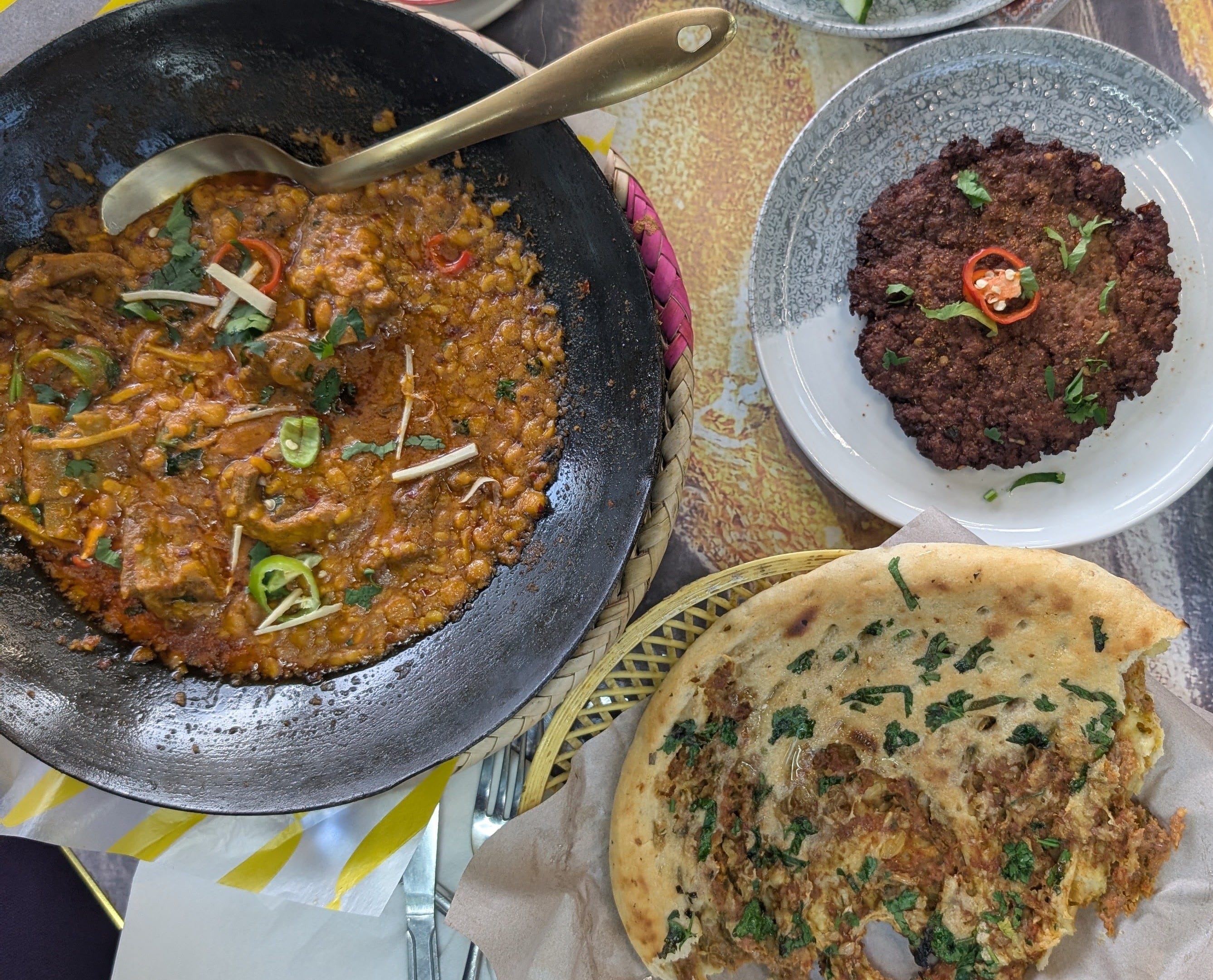
You won’t see much chatter about Lahore online. Maybe it’s not ‘aesthetic’ enough. An unfancied part of town, precious little self-promotion, and dishes presented for hearty appetites rather than for the ‘Gram might be factors. Local blogs have been kind, though, with one review gaining the sort of traction which meant staff often found themselves chuckling as yet another new customer would turn up with the same order (lamb nihari, hariyali kebab, keema naan and haleem, since you’re asking).
A display cabinet holds pakoras, samosas, chicken legs. Chapli kebabs. The chirrup of delivery app terminals. Stay and eat, though: those chapli lamb patties, the Afghan-Pakistani staple (£2.50), will come barely-crusted from the flames and nubbly with onion; the mixed grill (£19.99) arrives sizzling and hissing on cast iron, seething like that ex who can’t stand to see you happy.
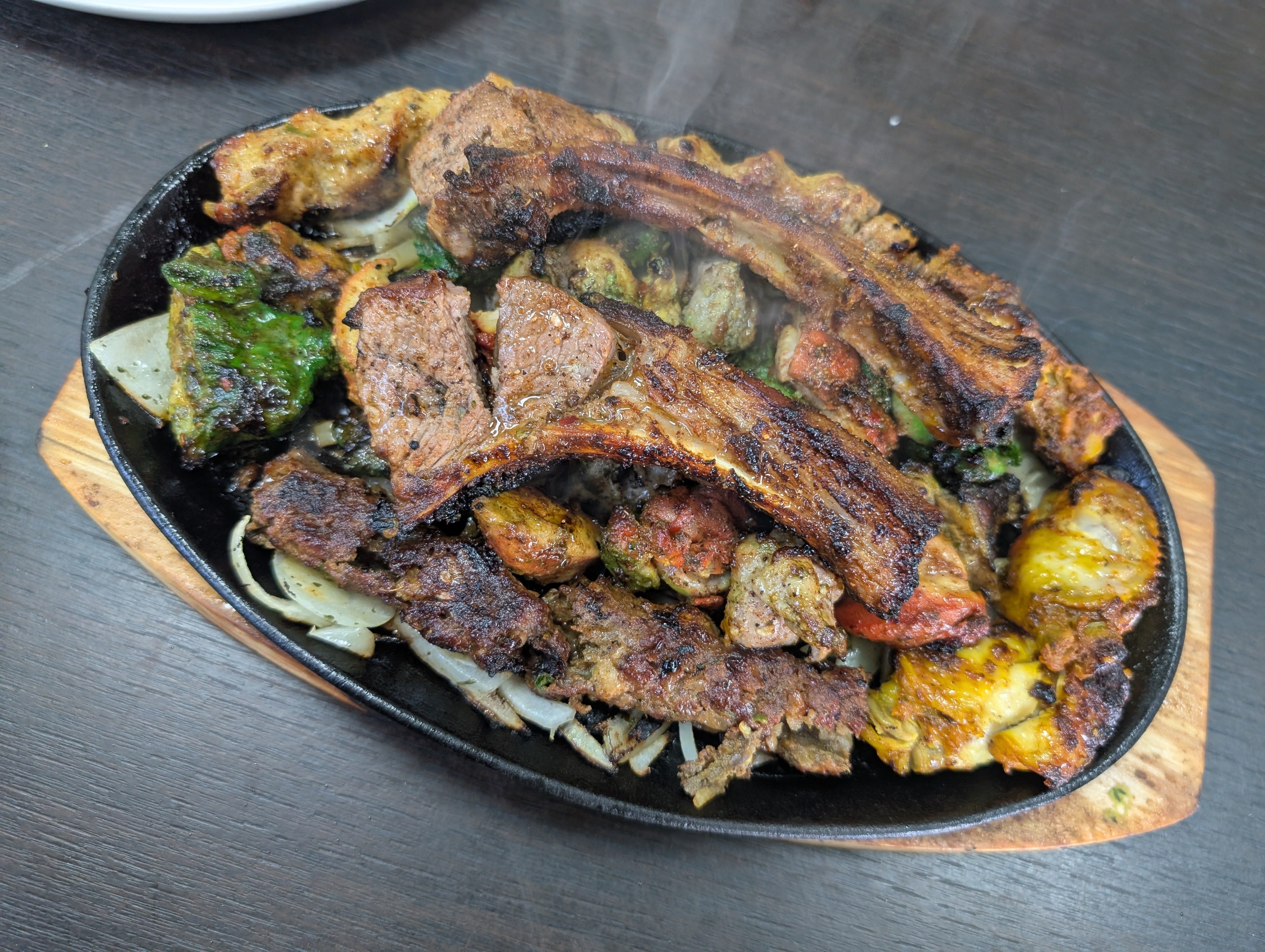
It’s a hefty thing. There are lamb chops to have you worrying and gnawing at the seam of smoky fat which has crisped along the length of bone; plump, spice-stained wings; a tricolor of chicken tikkas, malai tikka supplying the white, hariyali the green; finely-grained seekh and chicken kebabs. You’ll find yourself ordering this one again and again, even as you tell yourself to try something new this time.
Much will be familiar — korma, tikka masala, butter chicken, jalfrezi — but Lahore is proudly aware of its Pakistani (and Muslim) heritage. It’s there in the stand with copies of the Qur’an in English, or the wall-spanning mural, as much as the menu.
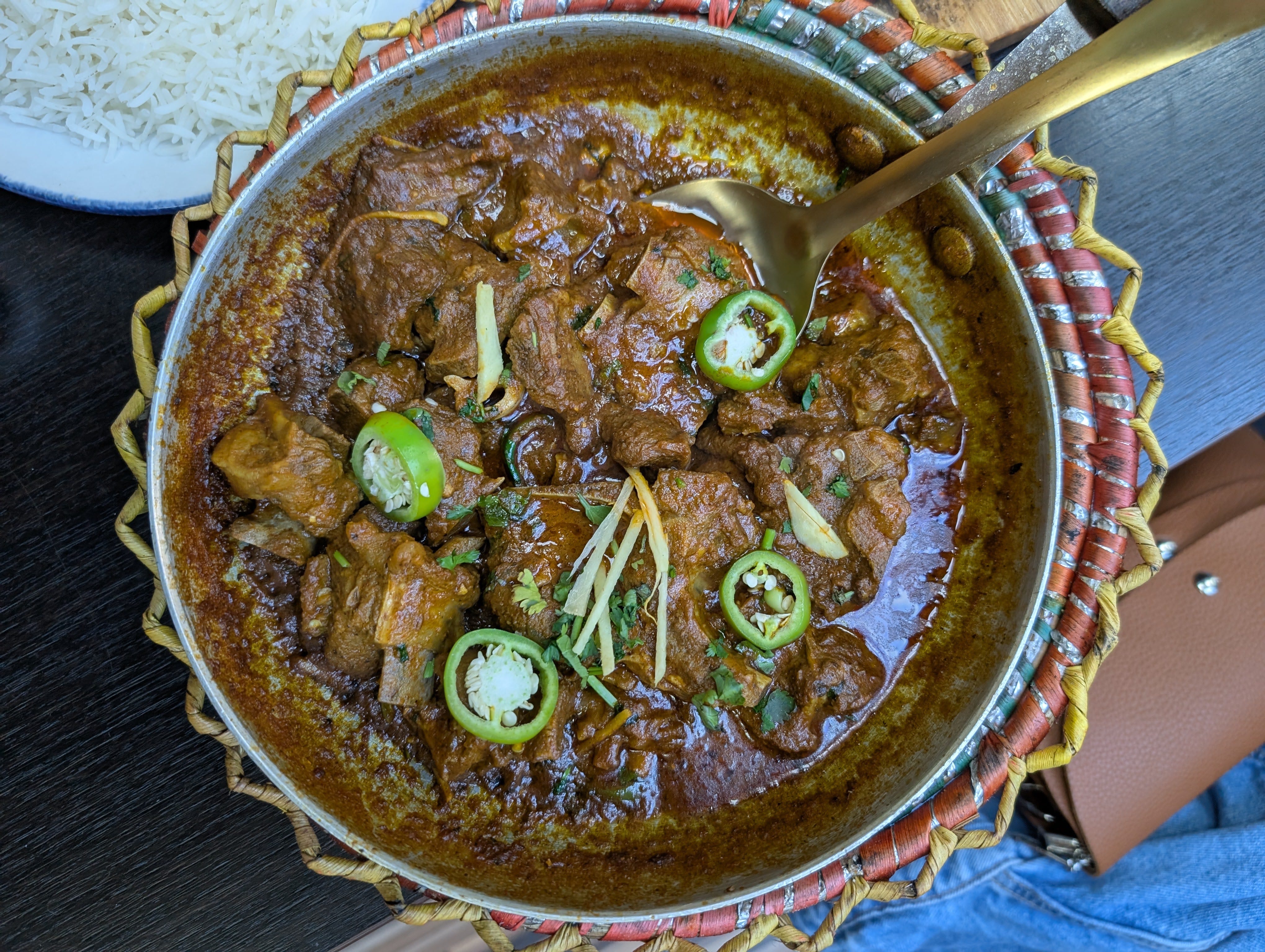
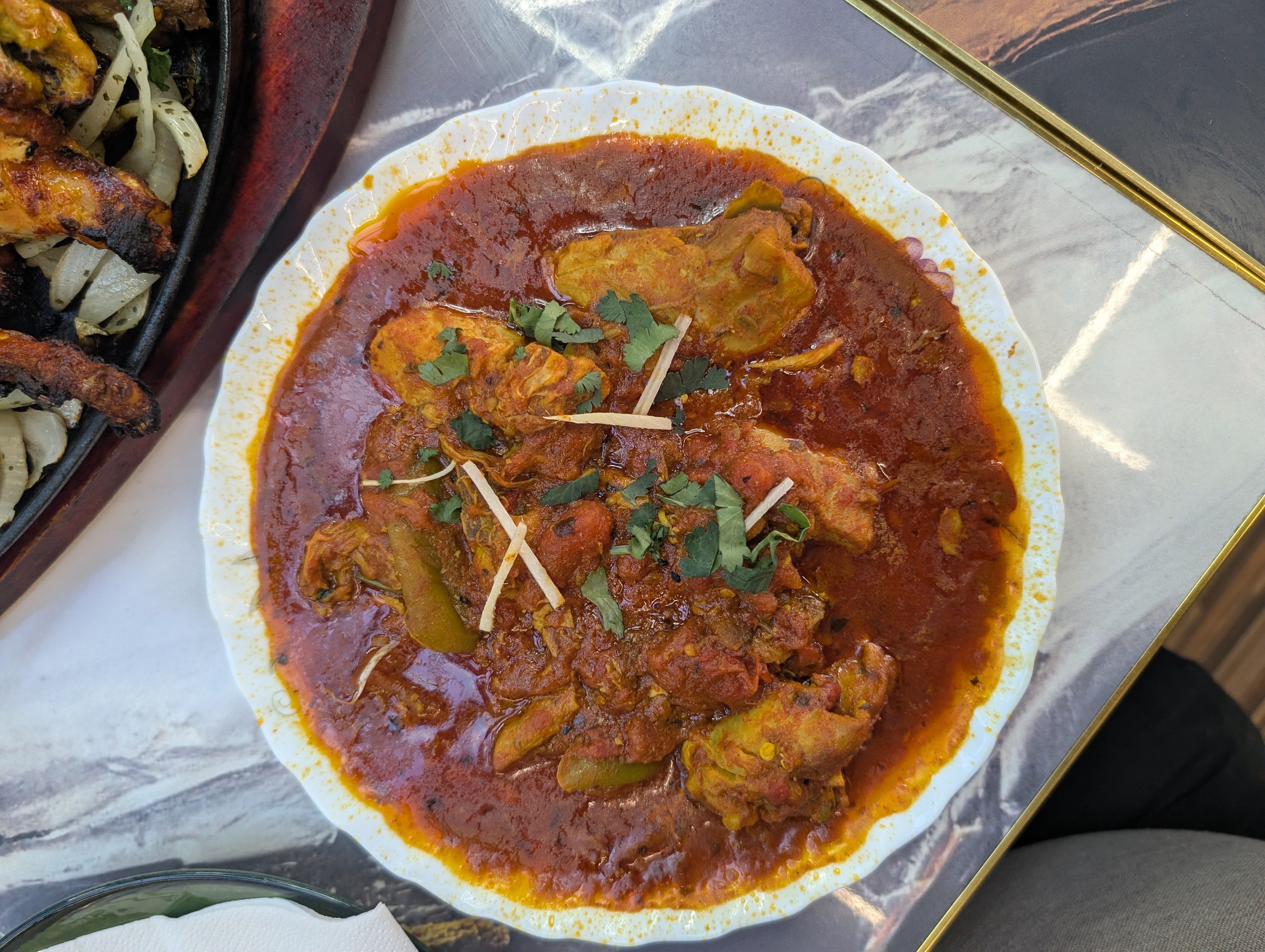
Mutton karahi is a bold thing, all depth and heft and green chillies and ginger, and at £12 some of the biggest return on investment you’ll find in the city. It’s uncompromising stuff, as is the achari chicken — sour, pickle-tangy, eaten off the bone. None of this is prissy food. Dig in.
It’s good advice for the dal gosht (£20) too. This is truck drivers’ food, owner Haider tells me, as he brings the karahi, explaining that it’s a favourite at roadside dhabas of Pakistani highways. The dish — again, served on the bone — is a pan of creamy lentils piled with green chillies and coriander stalks, the stew brightened with just-cooked ginger moments before serving. Make sure you get up close and personal: there are cuts to be gnawed into submission and bones to be sucked clean of their marrow.
Haleem (£11) a thick, hearty stew of lentils, cracked wheat and minced mutton pounded into a paste and spiked with slivers of ginger and the bite of charred onions. It takes some beating as a bowl of comfort eating. Breads are plentiful — paratha, roti, various naan — but it’s the keema naan that has a sort of cult fame locally. Made in the enriched roghni style, it is fighting a losing battle to contain its filling: more meat than bread, plump and yet light. At £4, it remains one of the city’s standout cheap eats, a cult classic in its own right.
It’s fascinating to watch other customers as we eat. Some aren’t, strictly speaking: just a quick pop in, a brief chat and off they go again. Tables are full of families, prams and all. Dads pop in to collect softly steaming stacks of tawa roti, two for a pound, for the family table. Whatever their wider appeal these days among the city’s food lovers, Lahore has remained at the heart of Grangetown. Both of and for its community.
You’ll see that in most restaurants around here, mind. My pet theory, honed by many an hour in mandi houses, is that they work as places to gather, as much as places to eat. In effect, pub-like social spaces for people who drink no alcohol.
An eclipse has come and gone as we eat. We reemerge on to Penarth Road to find Grangetown bathed in an eldritch light. An enthusiastic stranger wants to show me the pictures on his iPhone, but in our own way we have been quietly dazzled and we didn’t even have to pop colanders on our heads.
I dare say there’s a Lahore in your town. Or a spiritual cousin anyway. So perhaps this is less a restaurant ‘review’, more a plea for overlooked places in unfashionable areas. Perhaps what matters is the idea that places like Lahore tell a story of how a city has grown. Maybe it’s a reminder that there are always far more interesting things to talk about, and more interesting food to discover, than the sanitised, filtered ‘foodie’ version of our cities allow.
All words and photos by Jonathan Swain
Lahore Kebabish, 174 Penarth Road, Cardiff CF11 6NL
The Bristol Sauce is an AI free publication — all our work is written and edited by humans.
Find Bristol’s best restaurants on the go with The Bristol Sauce app — available exclusively to paying Saucers.
