


Good afternoon Saucers! This review from PXandTarts is slightly longer than I usually allow, but well worth the extra word count. Also, in editing this I learnt that a rollout should be all one word when a noun, but separated as a verb ‘to roll out’, which is the kind of stuff that I find bemusing. If you, too, appreciate such attention to detail being applied to Bristol’s restaurants, please consider helping us roll out such reviews by becoming a paying Saucer.
I have a confession to make. I’ve never eaten a Dishoom bacon naan. More egregiously, I’ve never darkened the doors of Dishoom full stop. You might think that’s an irrelevant way to start the review of an entirely different restaurant, but it seems likely that to dine at the first Kush is to be at the beginning of a rollout, along the lines of the still perpetually queued-up Dishoom.
Kush is the brainchild of Aktar Islam. A chef and restaurateur of serious pedigree: Great British Menu champion, then judge, and the man behind Opheem in Birmingham, the first Indian restaurant in the UK to be awarded two Michelin stars. Nothing but rave reviews. I have never made it, despite continual promises to myself and others. Kush seems to be his diffusion brand, seemingly born of the Aktar at Home delivery service, itself spawned by a need to keep the COVID wolves from the door.
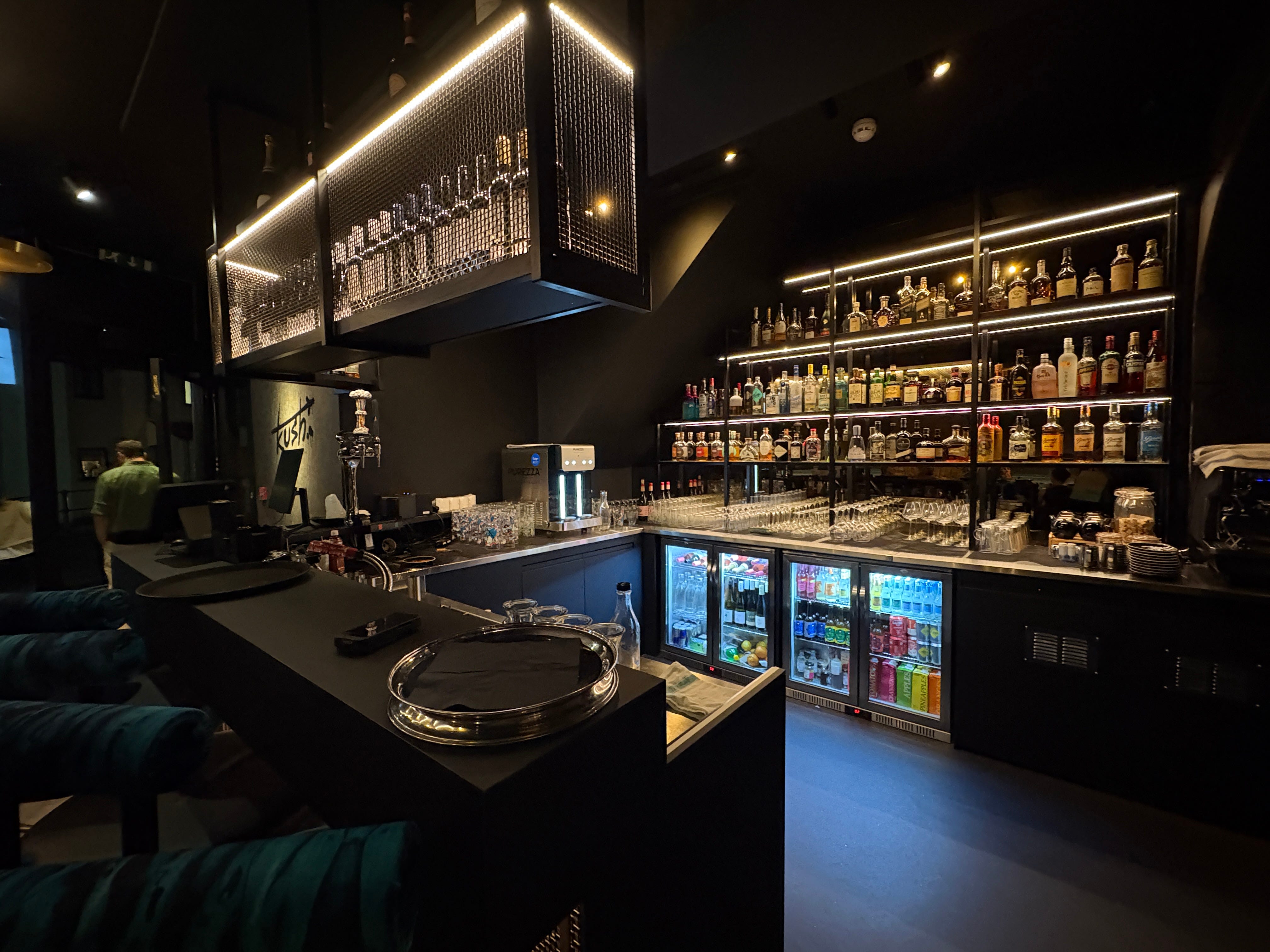
The Kush website talks about the “youthful spirit” of Clifton. As anyone from Bristol knows, in Clifton “youthful” refers to anyone under the age of sixty, while its “spirit” is very much “generational wealth and red trousers”. The place itself is dimly-lit, louche and rather cool. You could call it a mint room, although neither the apparent target audience nor the actual denizens of Clifton would have any idea what you meant, not being of the Oasis-and-alcopop generation; at least not the first time around.
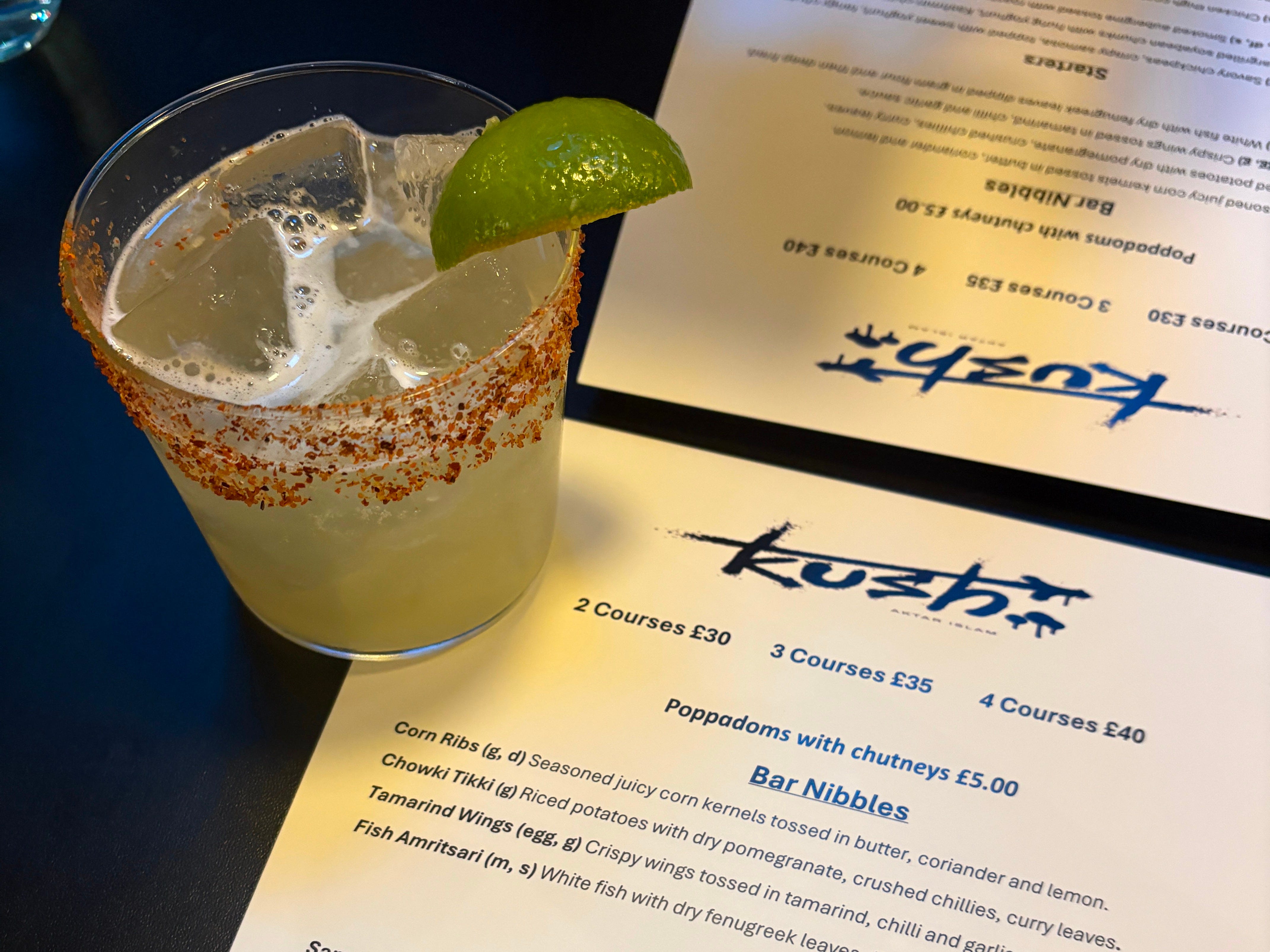
On the evidence of the picante (£12) twinkling at me from across the table, the bar at Kush knocks up a mean cocktail, even if it was about as Indian as Fisher Stevens. In these days of stop-the-boats fascism on one side and no-cream-in-my-carbonara cultural protectionism on the other, a little flavour pollination should be encouraged. It is, after all, how most of the best things, food or otherwise, come to be. And this mezcal, chipotle and lime concoction — a spicy marg, to you and I — was a rather good example of the sort. In a reversal of usual roles, I went for a cobra (£6.50), which is exactly the sort of esoteric in-joke that Meg complains I include too often.
Since it is now probably too late to close my Pandora’s Box of food confessions, I might as well admit I’ve never listened to the Off Menu podcast. I am, however, aware of a segment where the guest is asked “Poppadoms or Bread?”, presumably as part of an assessment for late stage psychosis. Nobody in their right mind is choosing the mouth-drying, acrid monotony of poppadoms, which are somehow the only thing on Earth that can be deep-fried and taste like dust, and that includes dust itself. A carb that you can’t douse, blob or smother with butter isn’t a carb I want in my life. Everyone at the table knew how I felt about poppadoms, and how passionately.
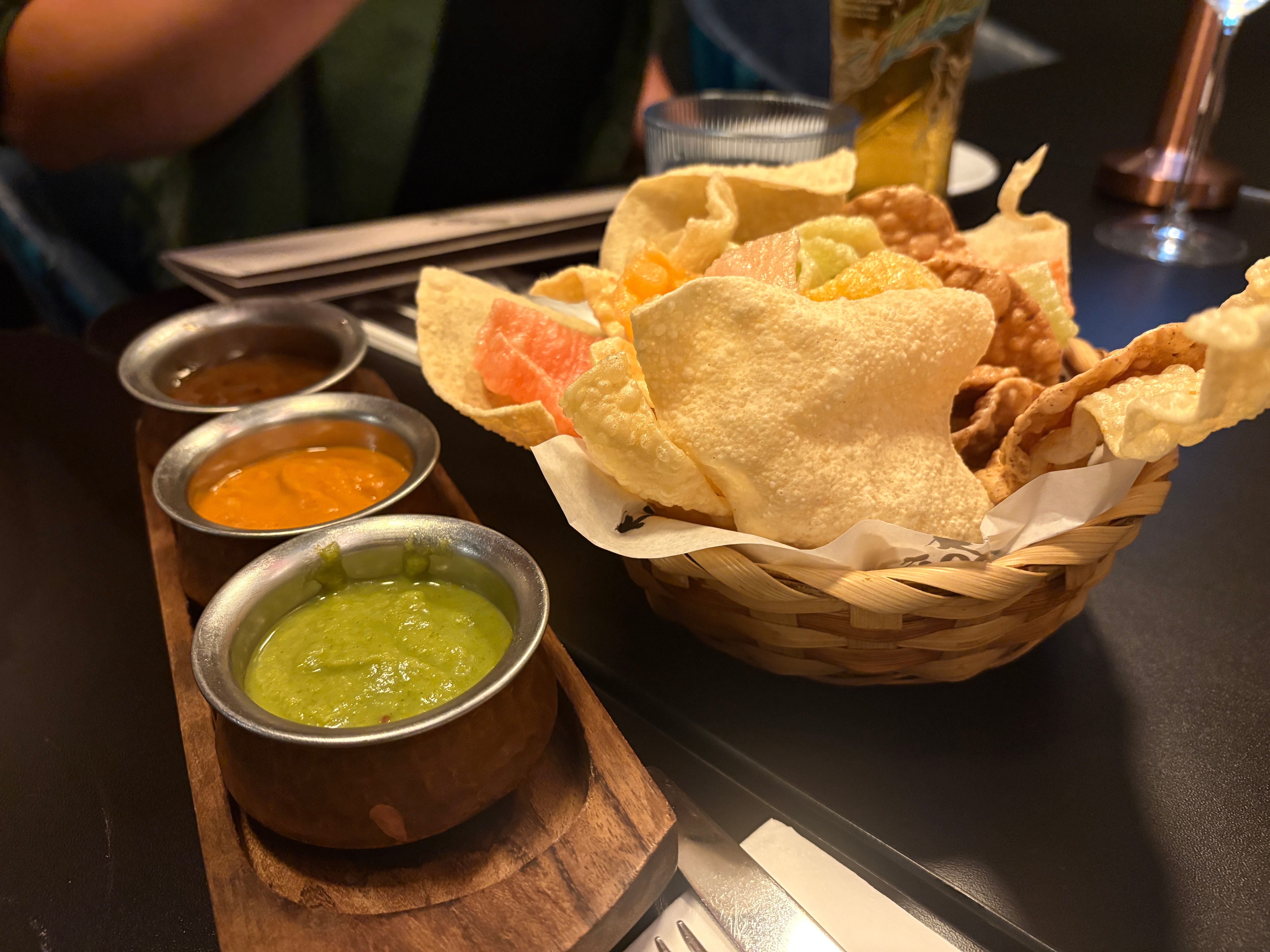
Anyway we got the poppadoms. They were very nice.
Freshly-fried, frangible, textured, variable. The chutneys were even better. A traffic light in Farrow & Ball. A rusty red of tomato and chill, creamier ochre-orange and a particularly vibrant, herbal go-go-go green. A fleeting nostalgic memory of chutneys you have eaten in curry houses before, but vivid and alive on the tongue instead of sweet and gloomy.
A starter of roast bone marrow, crispy chilli beef and Malabar paratha was like catnip to me. Even at a seven pound supplement on a three course for thirty five quid menu. Two for a fiver less, four for a fiver more; not a tongue twister, just your ordering options. Indian food has always, at least in my life, been about sharing. Get a load of curries, twenty naans and five too many samosas for the table. The set menu idea puts paid to this, or at least makes it unnecessarily complicated. Nobody wants to feel like they have to pass an exam to get a curry. Perhaps unsurprisingly, many of the most intriguing dishes carry a hefty surcharge, rendering the set menu prices basically a fallacy. As it happened, they’d run out of bone marrow anyway.
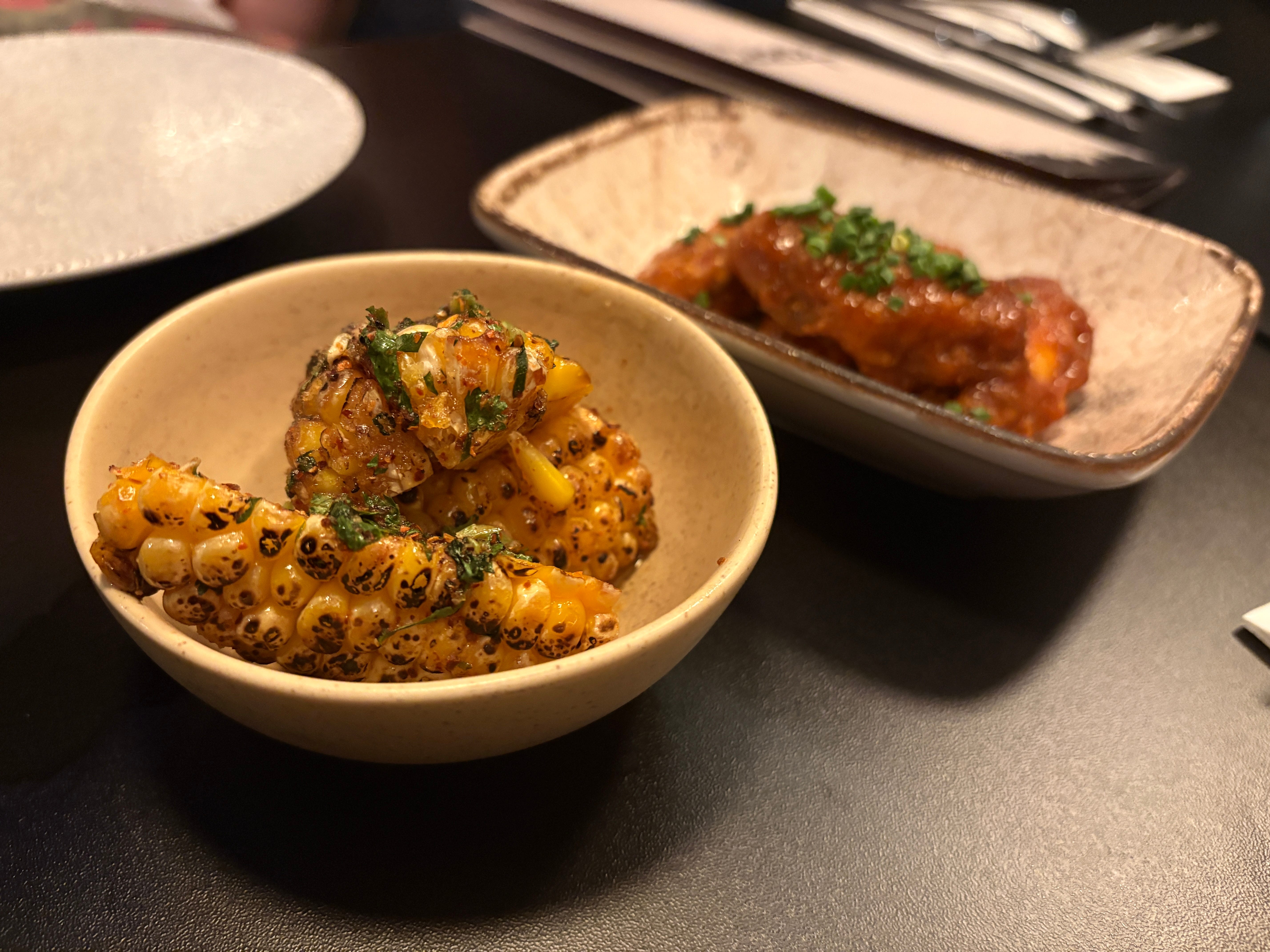
A head of corn was “ribbed” (a la Fallow, not Durex): split into four lengthways down the middle, blistered and charred then stacked and drizzled in gently aromatic, lemony butter. Each quarter soon vanished with little trace. Fragments of tiny bones and shards of shell bore evidence of what were once tamarind and chilli chicken wings and marinated achari prawns, leaving the table looking like a Daniel Spoerri tableau-piège. Both dishes, by the way, also bore hefty tariffs.
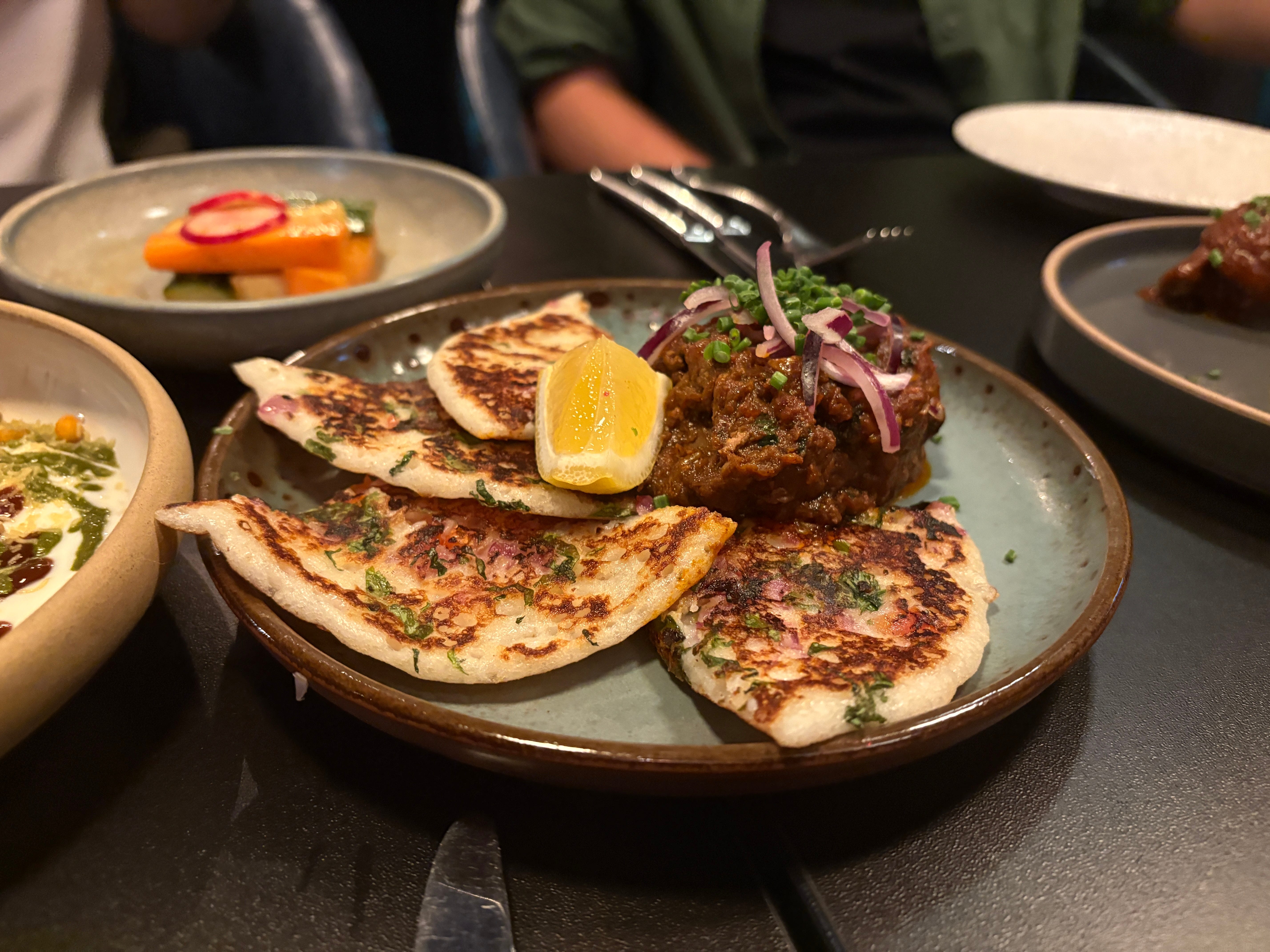
A little pile of liver fry was cooked through but springy rather than tough, bound by a thick, mellow gravy and primed for spooning onto quarters of the spongy, golden fermented rice pancake-alikes known as uthappam. This was doubly delicious in that, crucially, the chicken organs tasted great and, even more excitingly, they failed to attract the wrath of the Supplement Gods.
What were ostensibly mains were scythed into “curries” and “biryanis”. We chose two of the first and one of the second, picking up two further supplements (+5, +7) along the way, like Sonic the Hedgehog collecting rings as he whizzes through Green Hill. Old Delhi style butter chicken was a gem. Smoky chicken tikka morsels bobbed in a nutty, gently sweet sauce; the copperish hue of a posh farmer’s market-sourced organic tomato soup, far from the luminous orange of curry house lore. Its flavour was that of a tikka masala (once, let’s not forget, described as Britain’s national dish) that had travelled to meet its ancestors and come back having found itself.
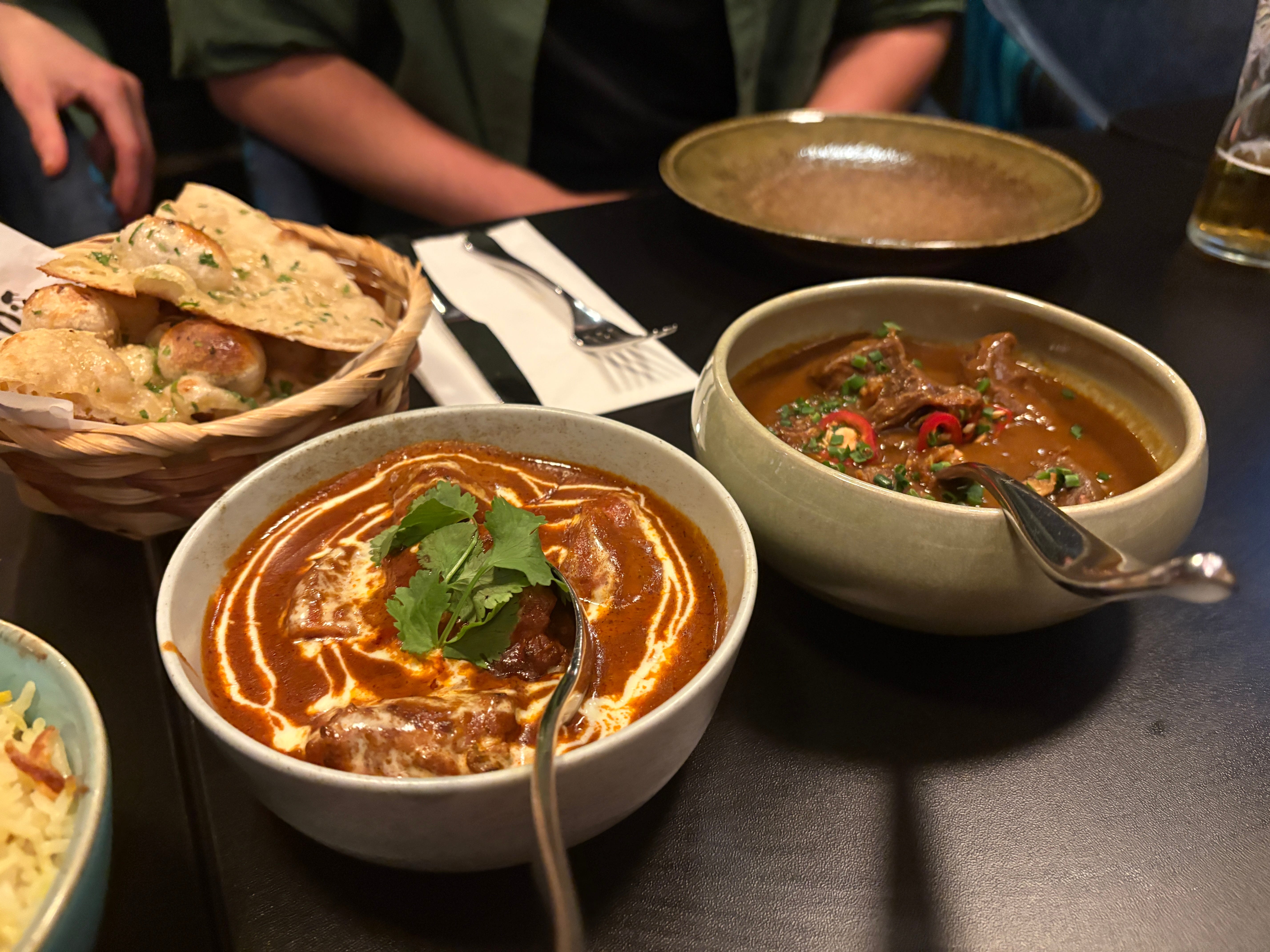
Ox cheek beef nihari was better still. Ox cheek can be disastrous in the wrong hands. Cows are ruminants with four stomachs. They eat grass. A lot. Grass is difficult to digest — go and eat some if you don’t believe me. Cows ferment the grass they have swallowed in one stomach and then basically sick it back up and chew it some more. They spend hours every day masticating. That’s why if you walk past a field of cattle you’ll see them all there, clumped together, chewing semi-vacuously.
A cow’s cheek, thus, is constantly processing, grinding and smushing while the animal is alive. The result is a massive hunk of muscle, full of collagen and connective tissue but little fat for lubrication. A tough bugger, which takes time and love and tender heat to turn into something you’d want to put in your own gob. The chefs at Kush have spent almost as much time and care turning a cow’s cheek into something soft, luscious and delicious as a cow initially does making it the exact opposite. In a deeply intense, robustly spiced gravy tingling with pepperiness, plum-sized nubbins of this cheek collapsed under a just a nudge of the fork, like Reform finances under the slightest bit of scrutiny.
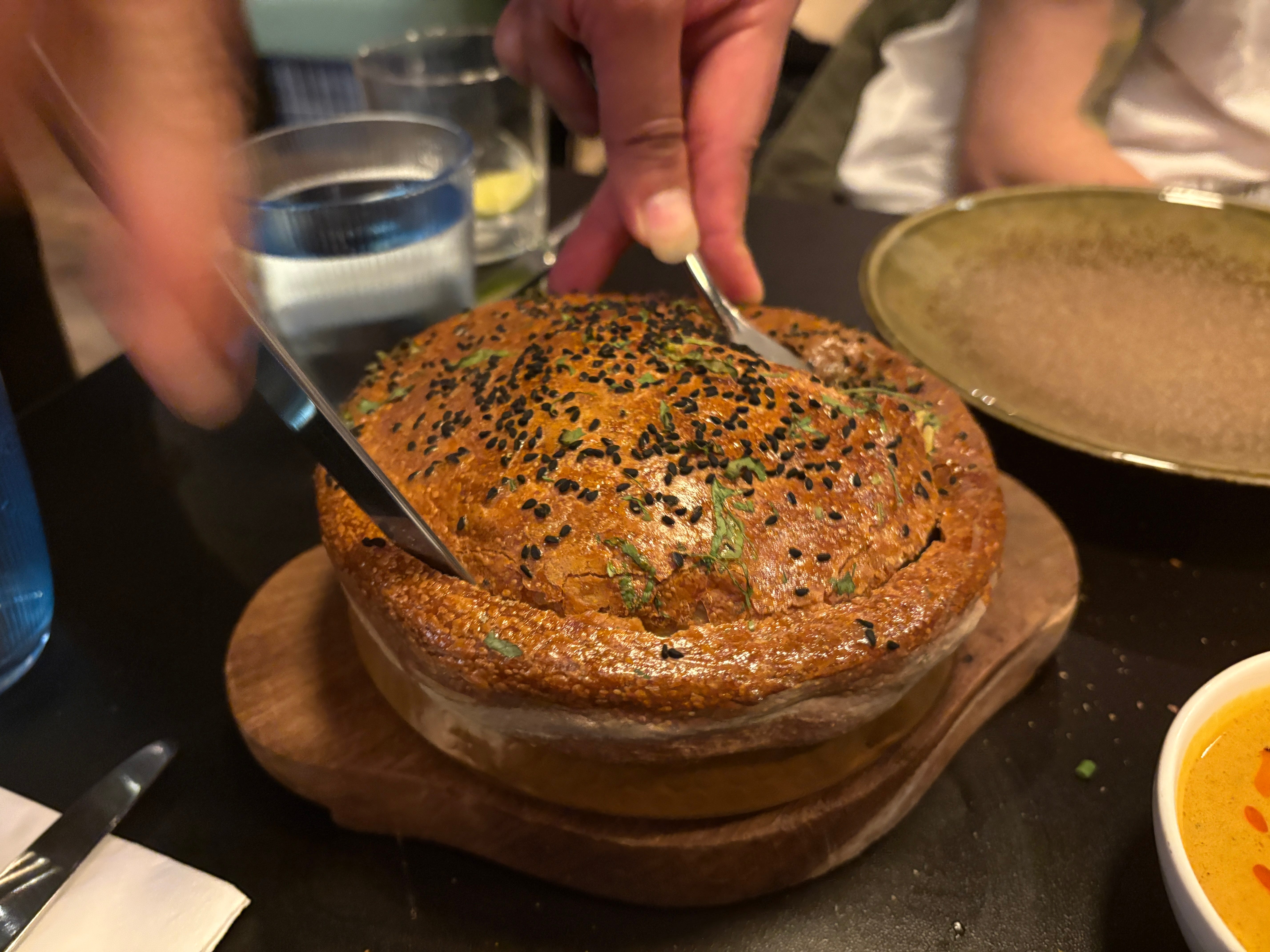
A Hyderabadi biryani (+£5) turned up at the table still wearing the nigella-flecked pastry hat under which it was cooked. I’d be tempted to call the thing a pie if only to enrage the pastry coffin traditionalists. The odd chunk of chicken could be found interspersed amongst well-slicked, distinctly separated golden grains of rice glistening with fat and moisture.
Of course, there was naan. Albeit a truffle and cheese naan (+£3, thank you very much), which felt like gilding the water lily, and a less rarified garlic, which very much did the job.
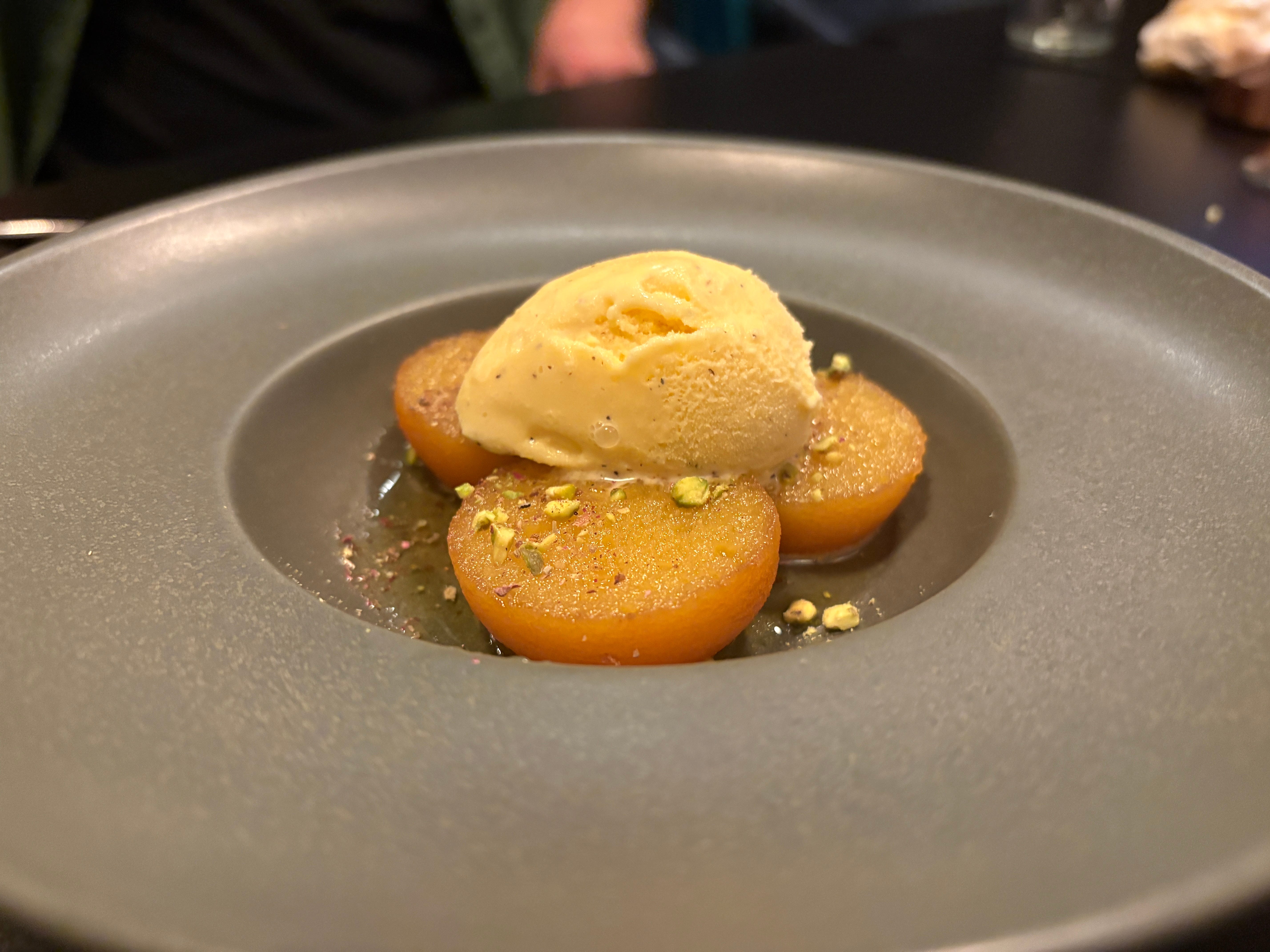
We were spared any surcharges with dessert, but with portions so far surprisingly generous, one for the table was deemed sufficient. Cheesecake and chocolate mousse were deemed too pedestrian, even if the former was accented by rose and saffron. Our chosen orbs of galub jamun came halved and were served cold, yet remained surprisingly soft and delicate. A scoop of vanilla ice cream was perched on top, rather too vanilla in the hedonistic sense of the word though arguably not enough in the literal, but maybe that was a deliberate attempt to protect the floral nature of the syrupy dumplings.
Kush is a tricky one to judge. The wordwang jumble of the website (“I had a wall before I had a canvas”) and graffitied branding certainly seem to be aimed at an audience more likely to be found in eternally aflame Stokes Croft or nouveau chic Bedminster than the swanky environs of York Place. That said, you’ll struggle to get out for much under £50/head once all those sneaky surcharges have been applied so perhaps those Clifton trust funds might come in handy. This apparent inconsistency and lack of local knowledge seems to betray a focus on impending roll out, or half an eye on the ambitious concurrent opening of already-acclaimed Oudh 1722 in London, rather than the eagle-eyed vision of a standalone site.
All that said, the food is undeniably very good. The trick will be keeping the poppadoms as converting, the nihari as seductive, as the rollout gathers momentum. You’d have to be a couple of grains of rice short of a biryani to bet against Aktar Islam conquering the country like tikka masala.
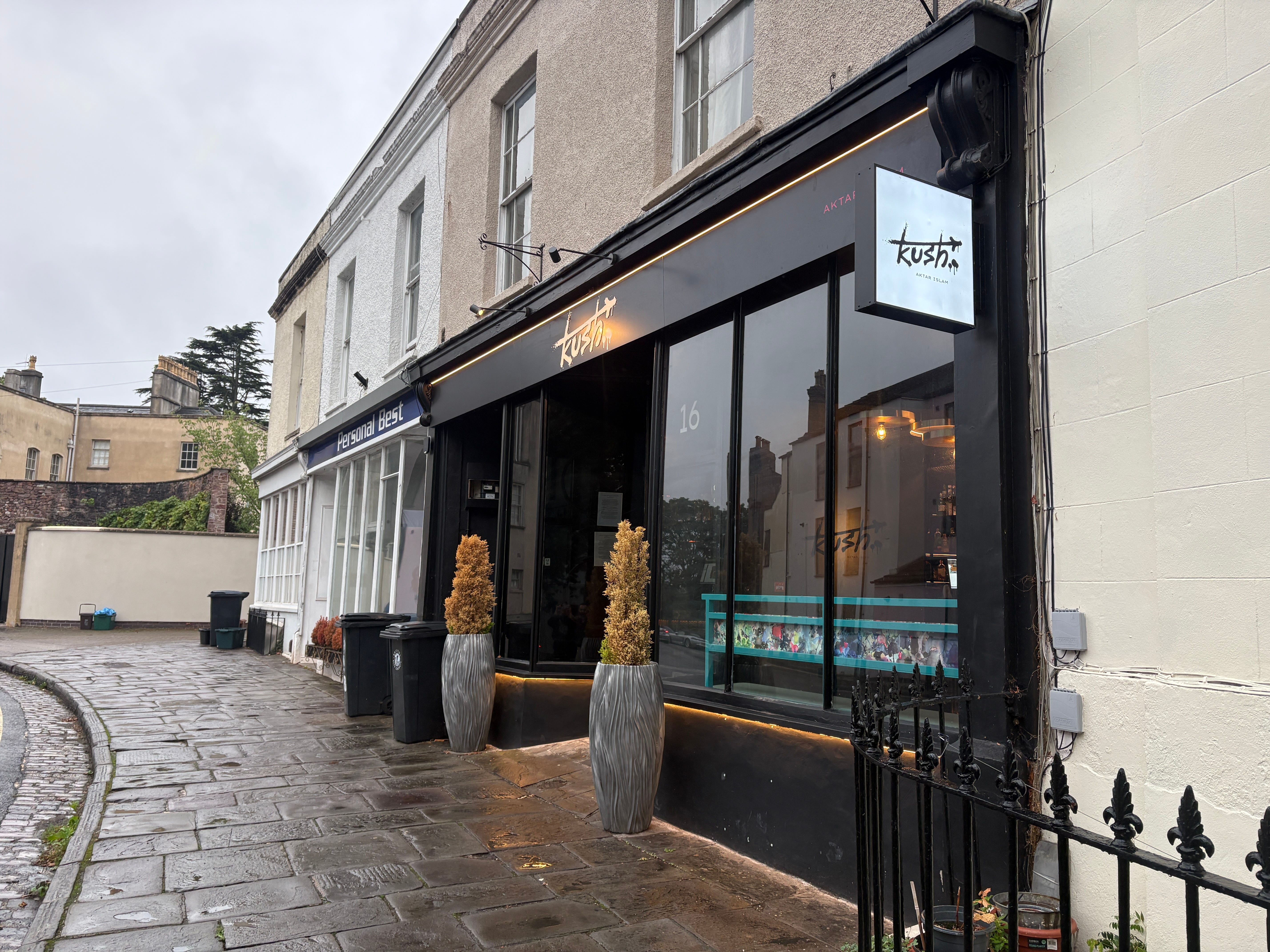
All words by PXandTarts, all photos by Meg Houghton-Gilmour
Kush, 12-16 Clifton Road, BS8 1AF
The Bristol Sauce is an AI free publication — all our work is written and edited by humans.
Find Bristol’s best restaurants on the go with The Bristol Sauce app — available exclusively to paying Saucers.
